Living Memory Ulmarra
Project
Environmental history
Living Memory Ulmarra fosters an understanding of place — one that honours local wisdom, lived experience, and builds practical capacity for an uncertain future.
Historian Kate Gahan collaborated with school principal Bianca Rhodes to deliver an integrated Stage 2 HSIE unit, called Living Memory, bringing together climate science, local history, Yaegl culture and stories, and local knowledge held by other community members.
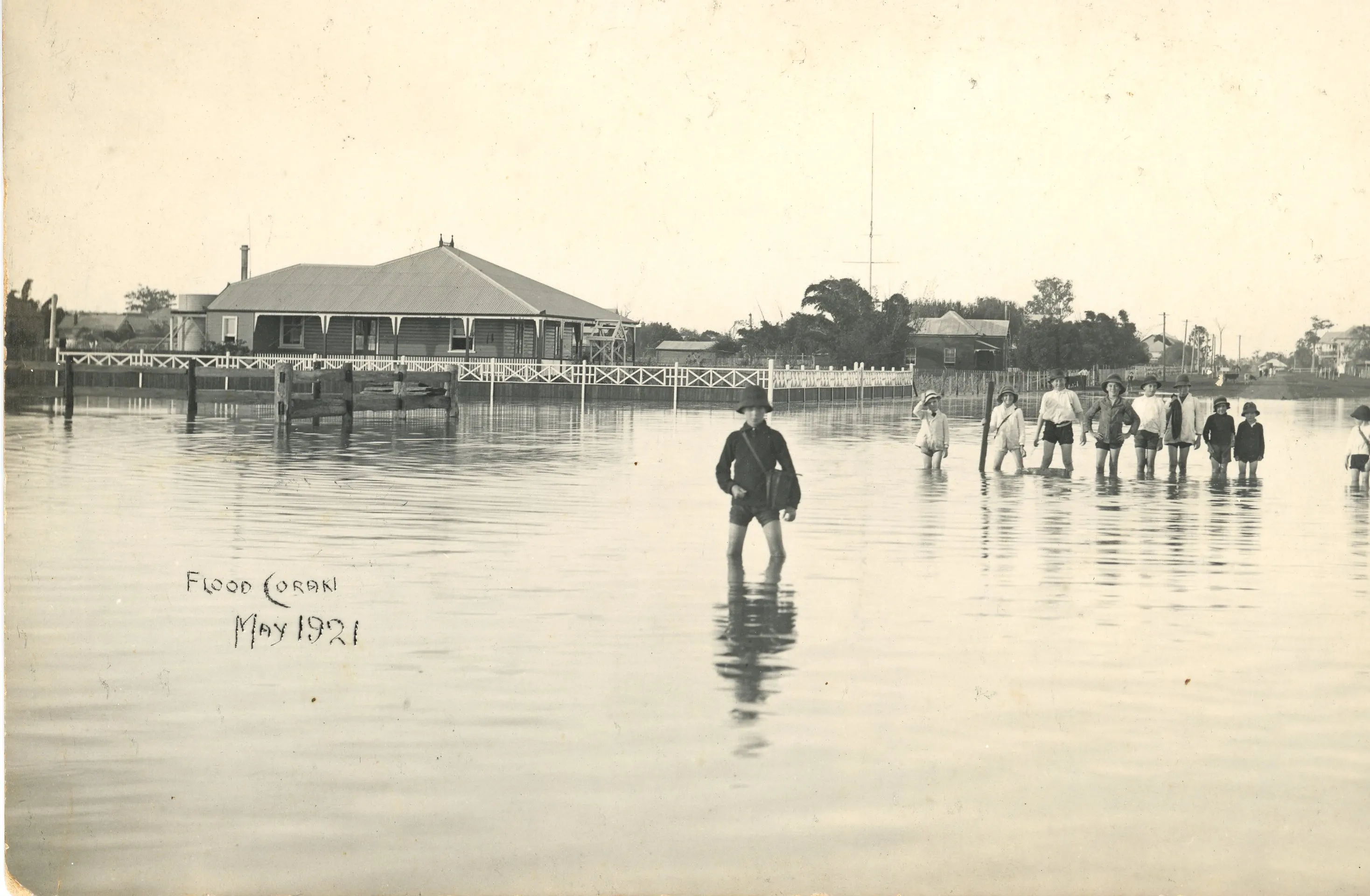
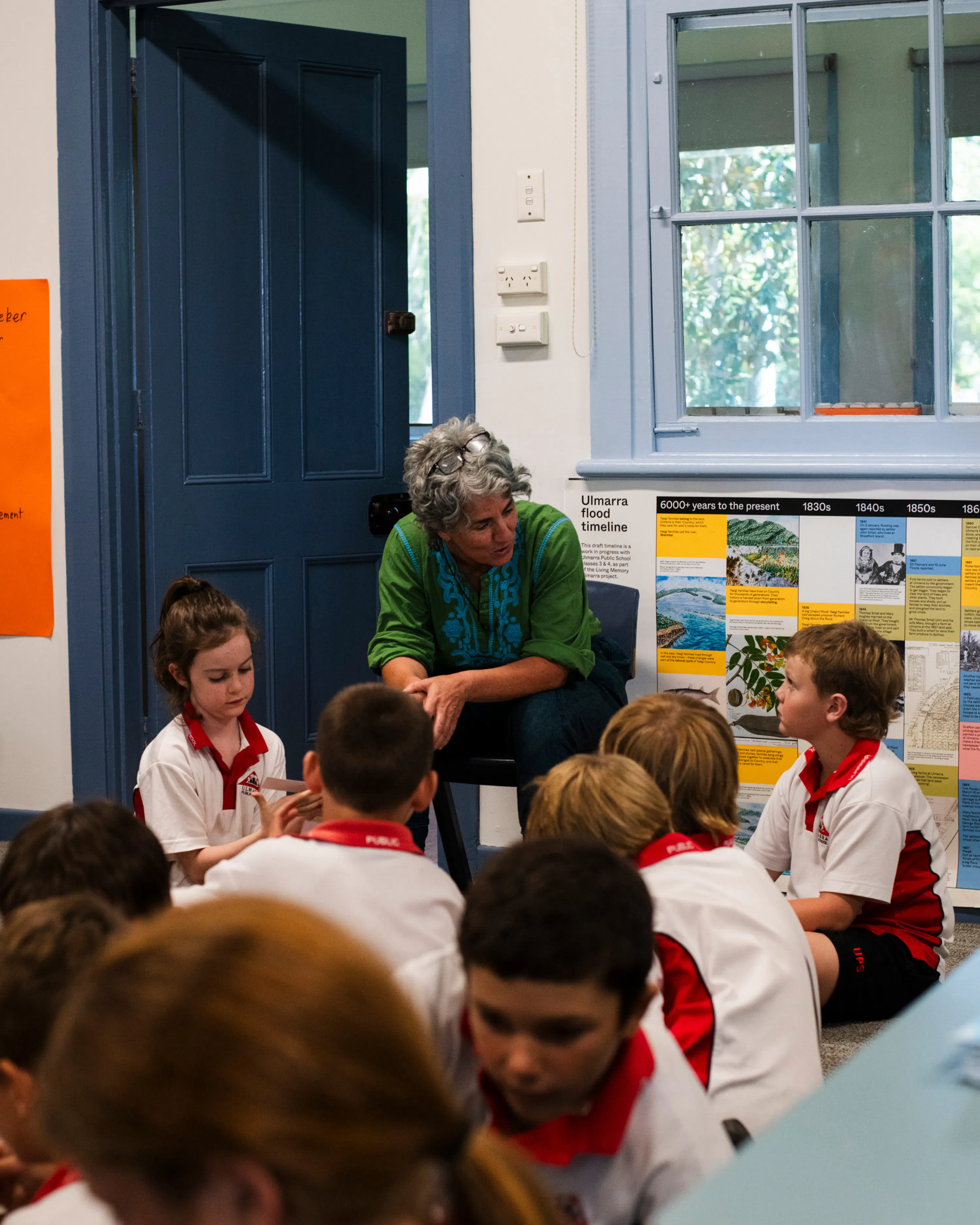
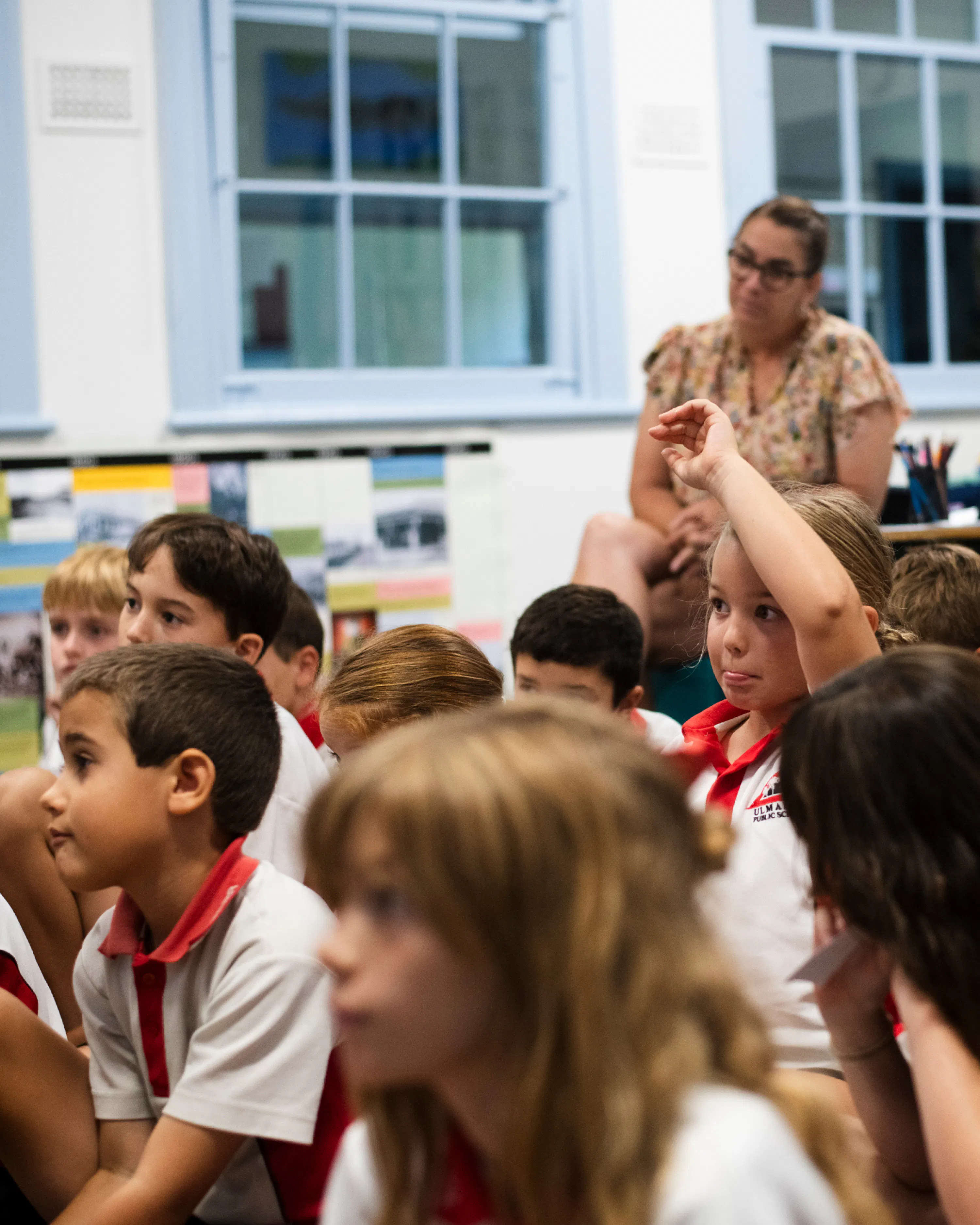
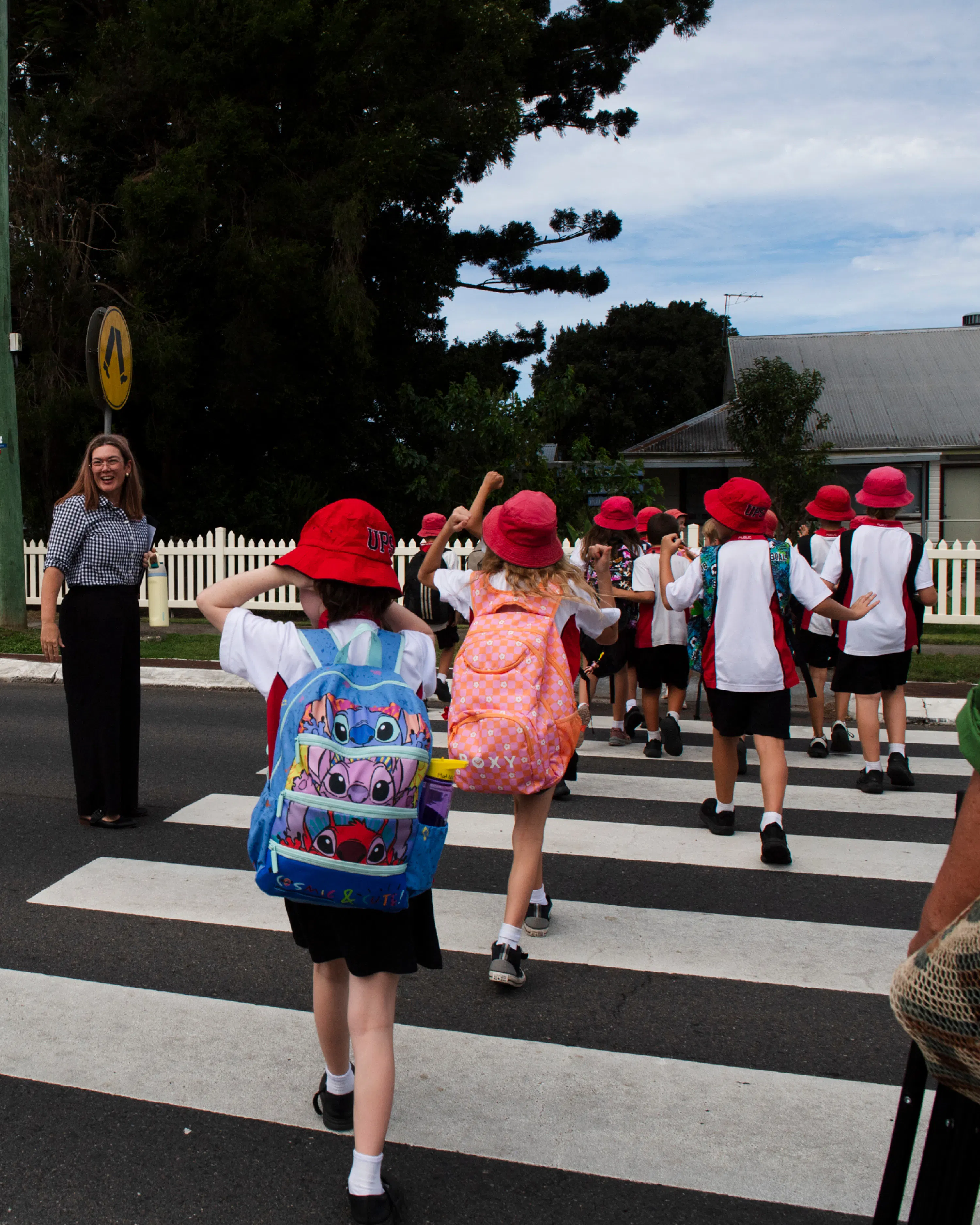
Throughout 2 terms, Years 3 and 4 students at Ulmarra Public School examined written and visual historical records of floods and looked at the landscape and its environment. They heard stories about past floods and other climate hazards, as well as learnt about Yaegl Country and culture.
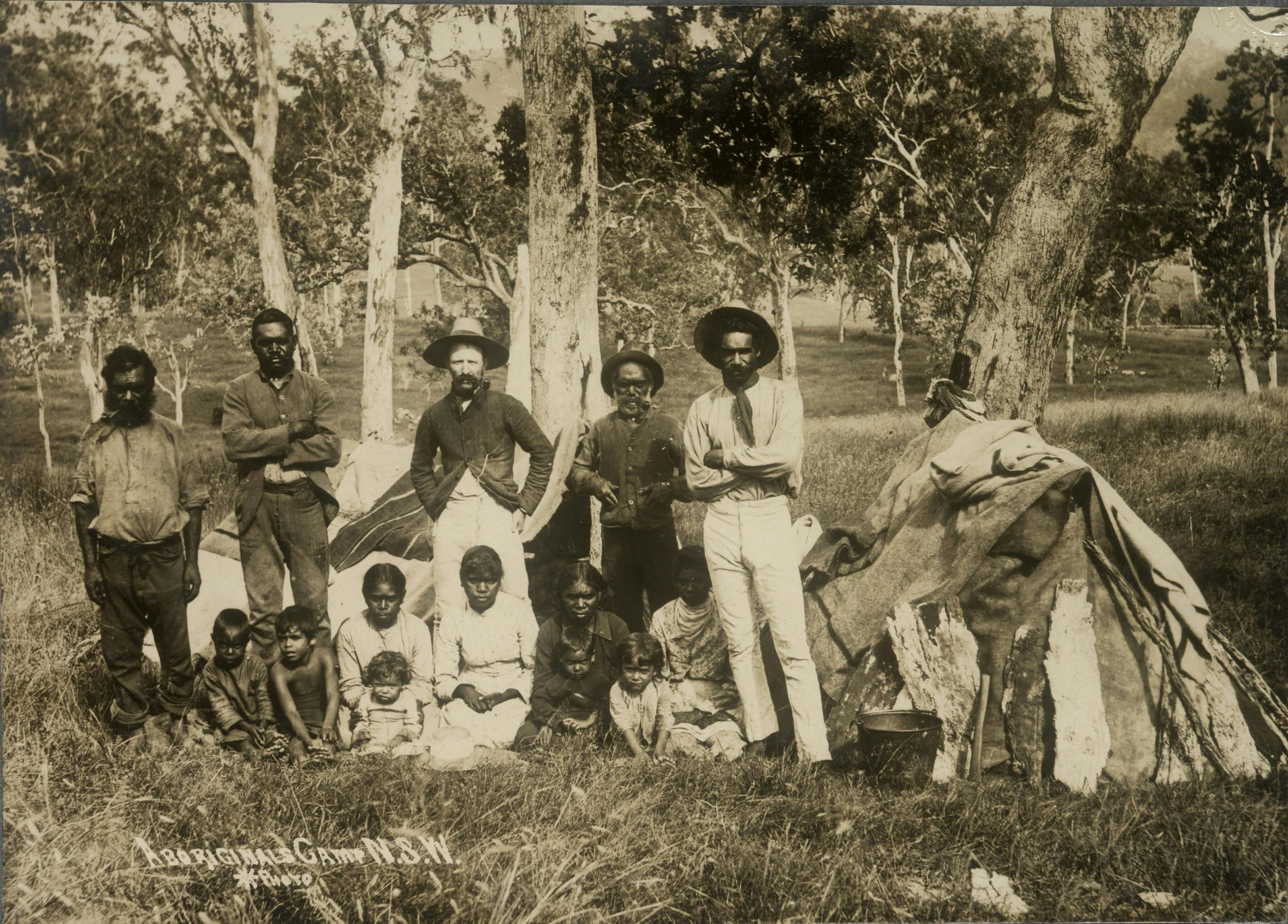
Aboriginal workers and families photographed at Yulgilbar Station on the Clarence River. Throughout the nineteenth, and into the twentieth, century many Yaegl families worked for settler families around Ulmarra. Image courtesy of State Library of NSW.
Background
Ulmarra is on Yaegl Country, where Breimba/the Clarence River shaped cultural life for thousands of years before European settlement. The 2022 floods brought unprecedented water levels to the Northern Rivers, and students at Ulmarra experienced firsthand the power of the river in flood.
Living Memory Ulmarra creates space for students to process what they've witnessed, learn from those who came before them, and develop practical understanding of living with environmental change. This school-based model offers an approach to environmental education that other flood-affected communities might adapt for themselves—one that centres local knowledge, respects lived experience and builds capacity for the future.
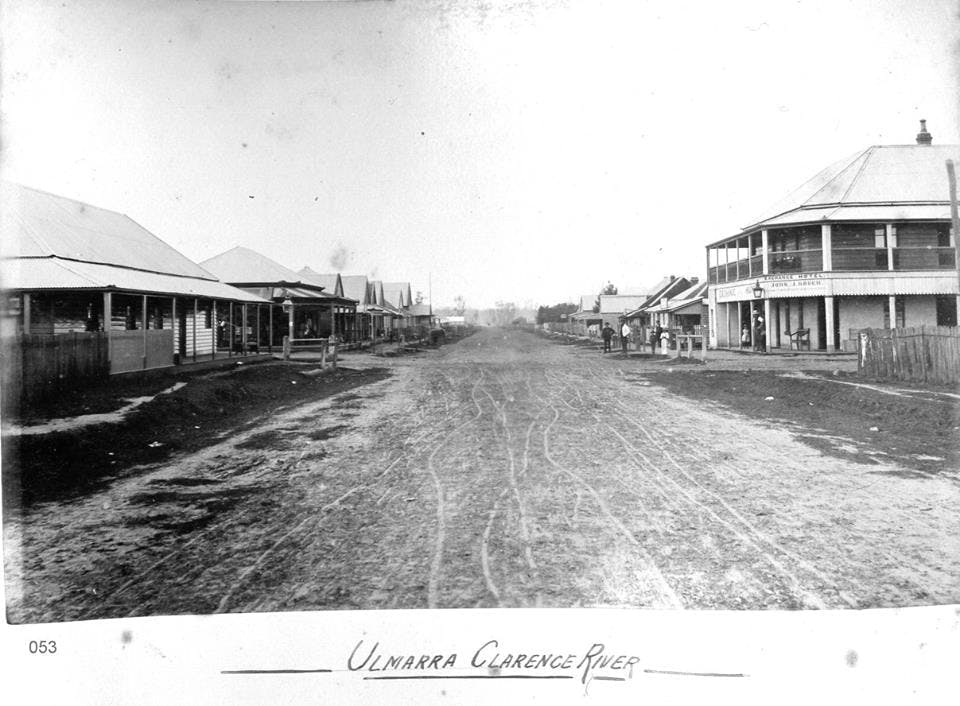
Coldstream Street, Ulmarra. c. 1890. Image courtesy of Kevin Watkins.
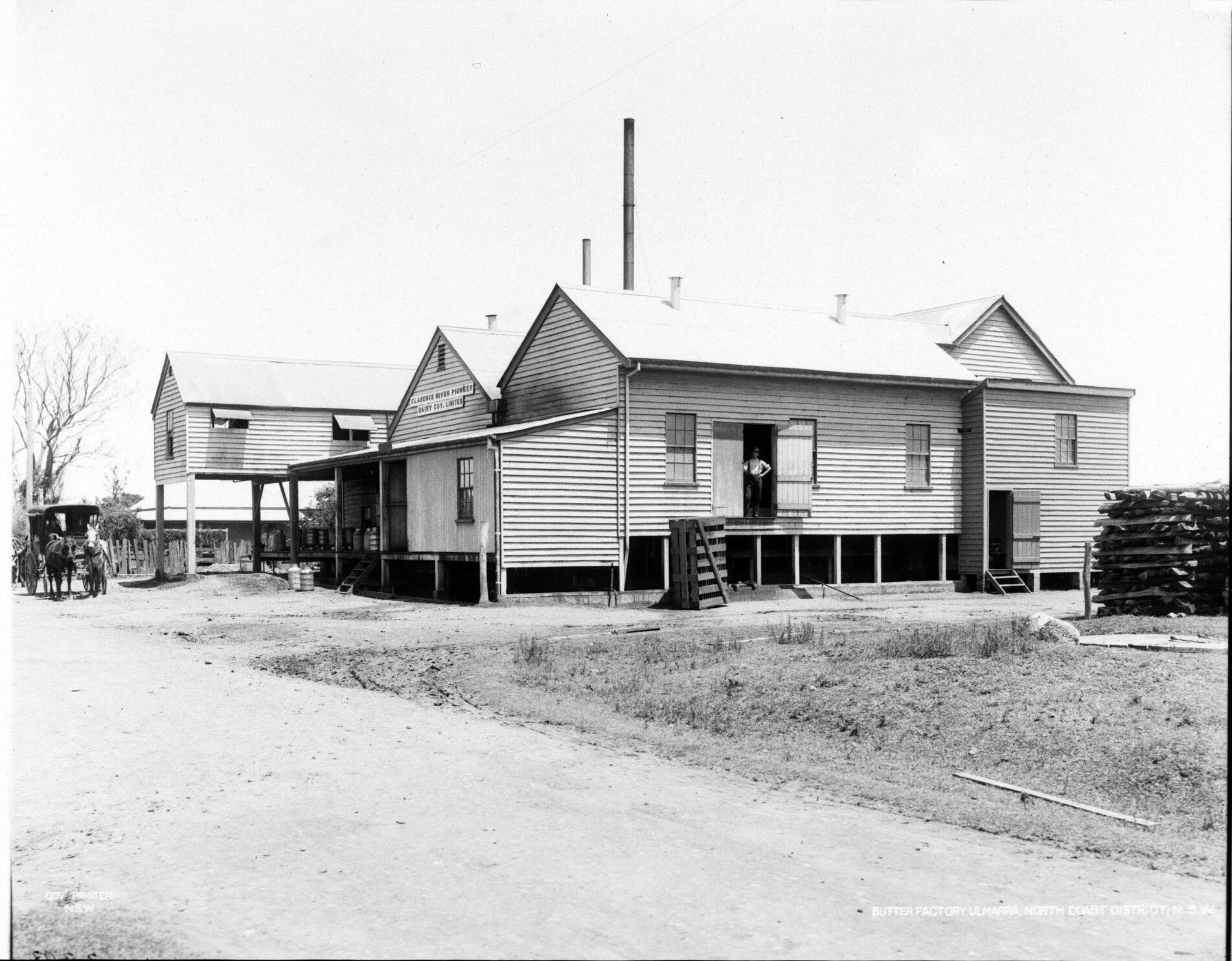
The first butter factory at Ulmarra in built in 1892. Image courtesy of NSW State Records.
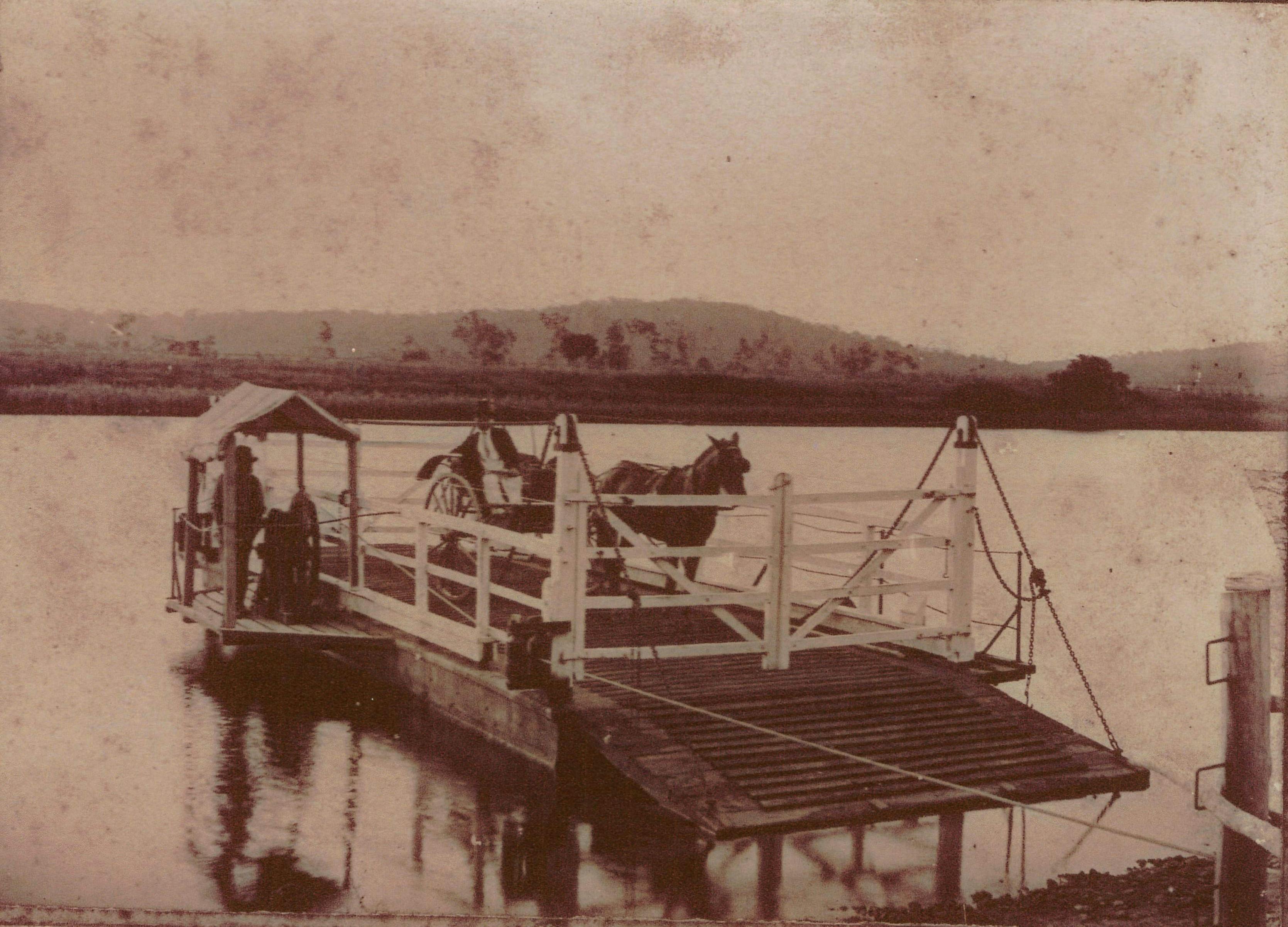
Ulmarra Ferry, which began to operate in 1902. Image courtesy of Kevin Watkins.
What the students did
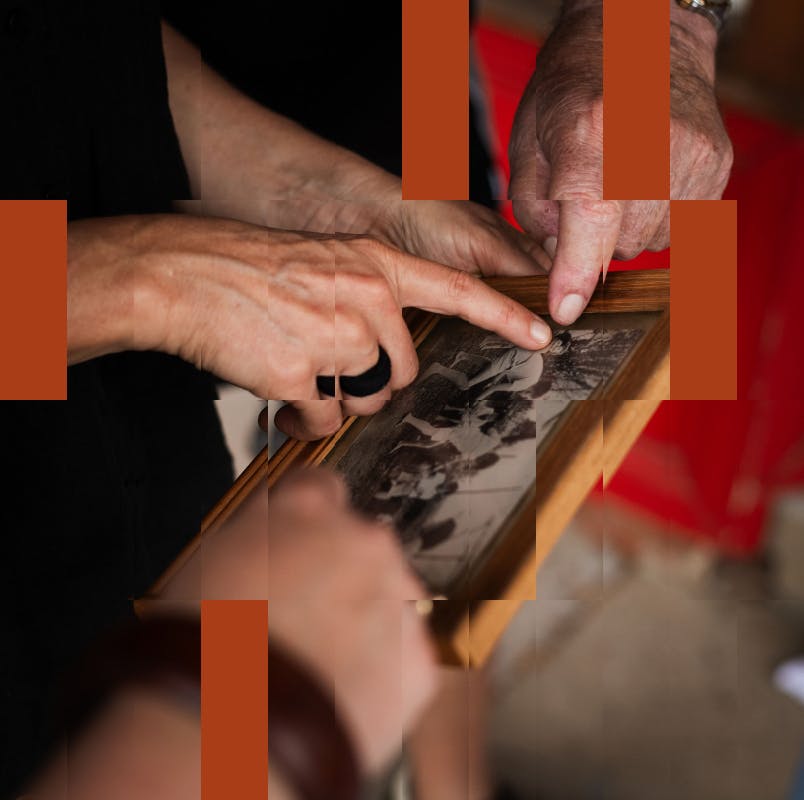
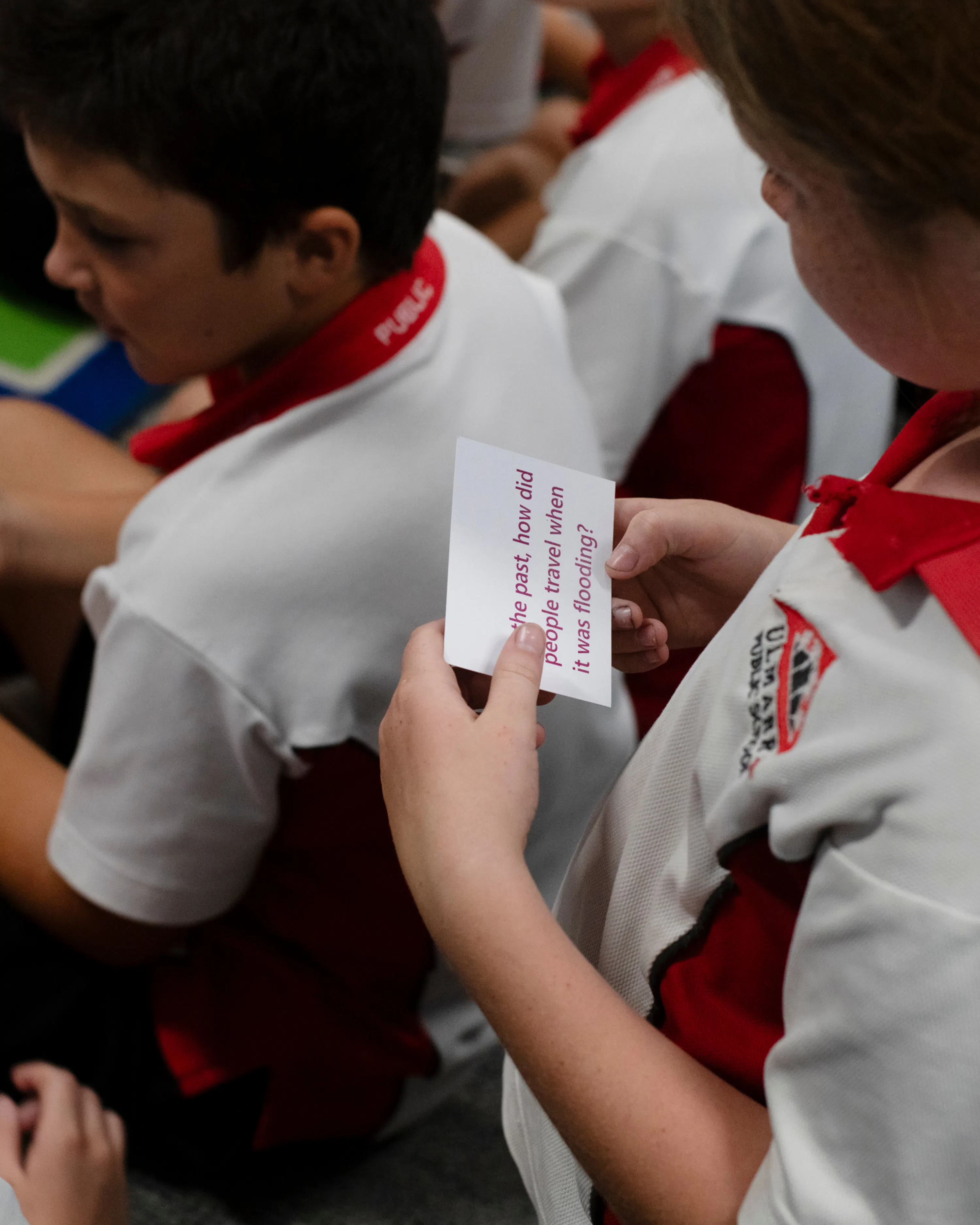
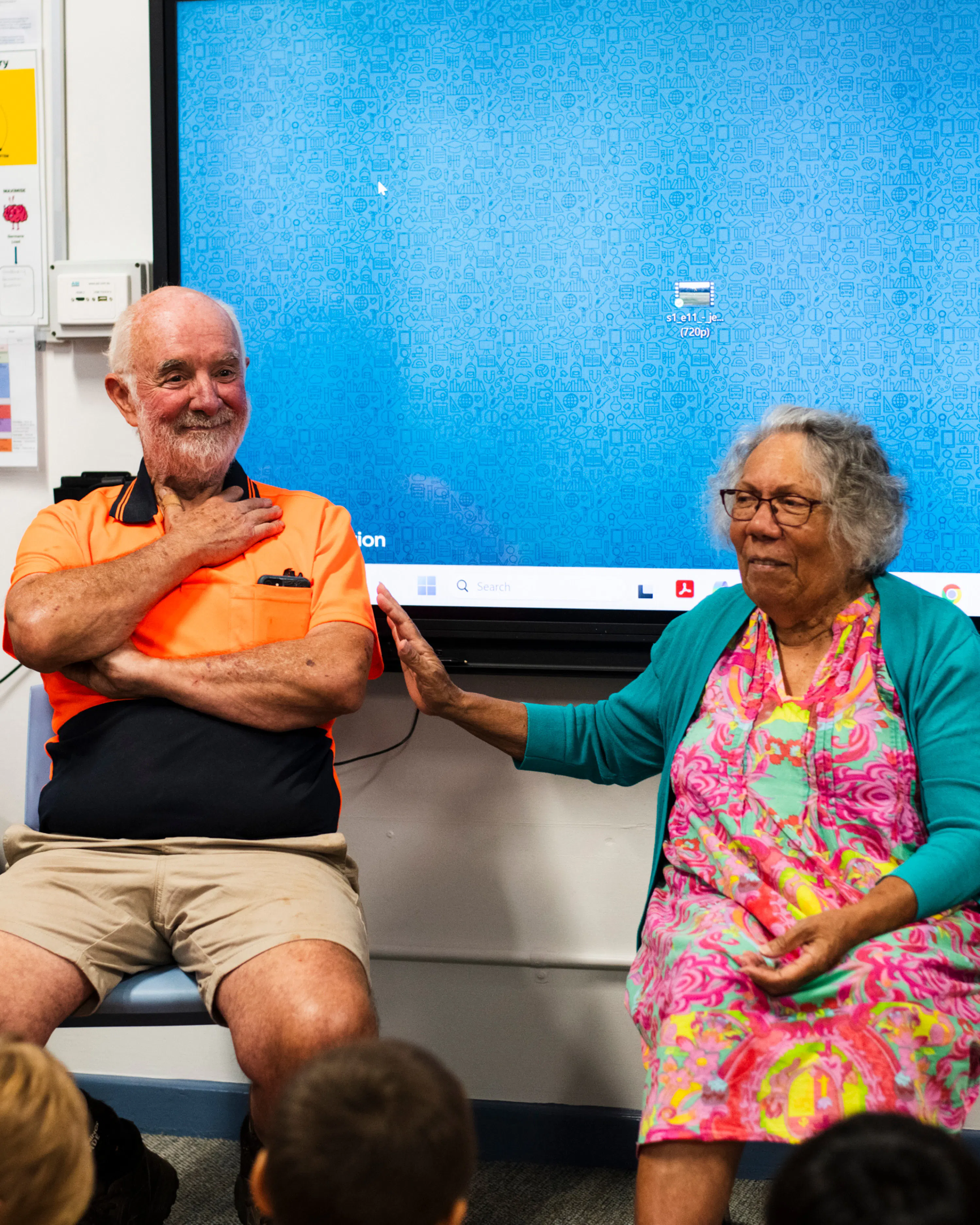
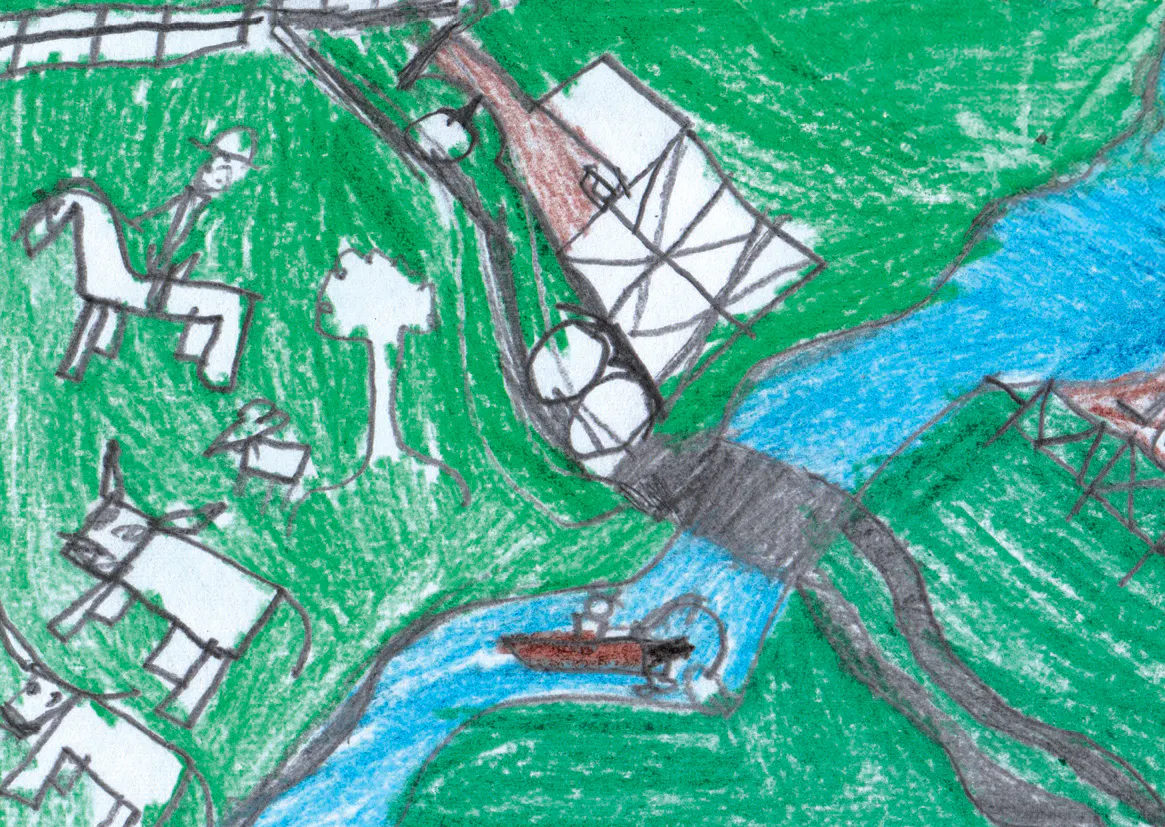
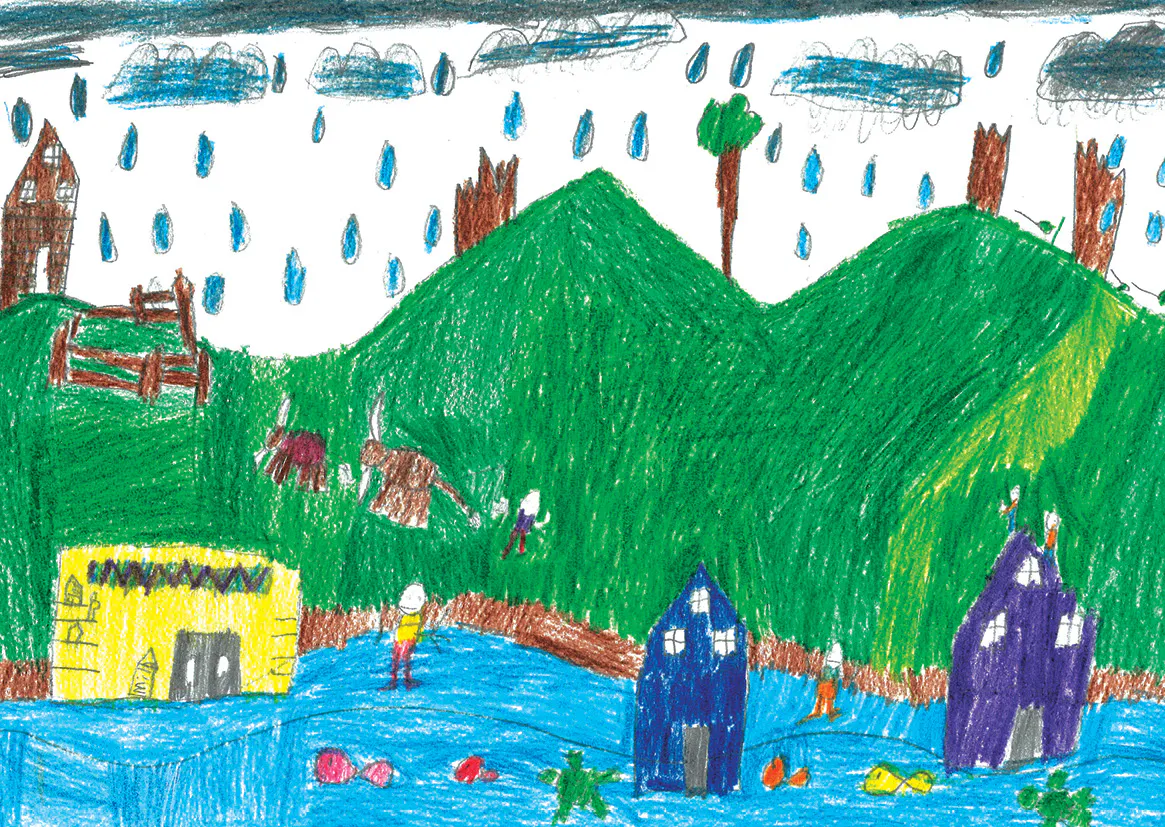
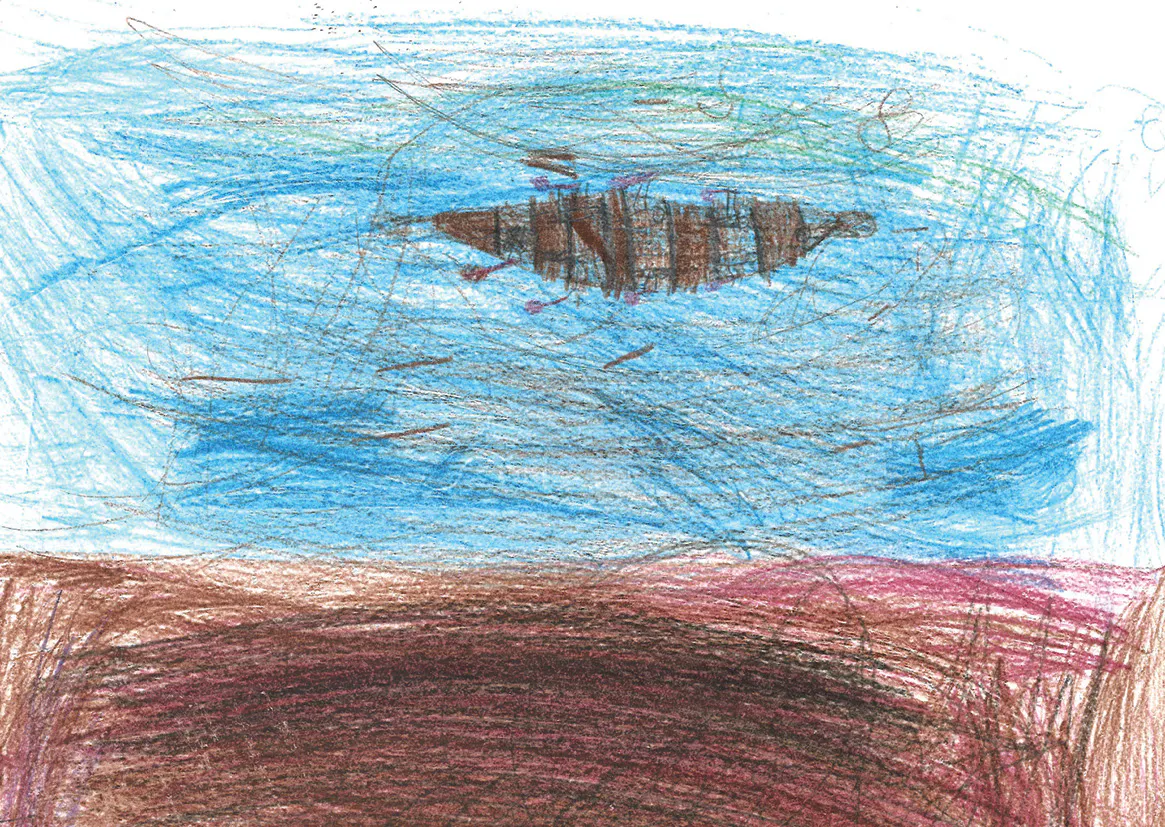
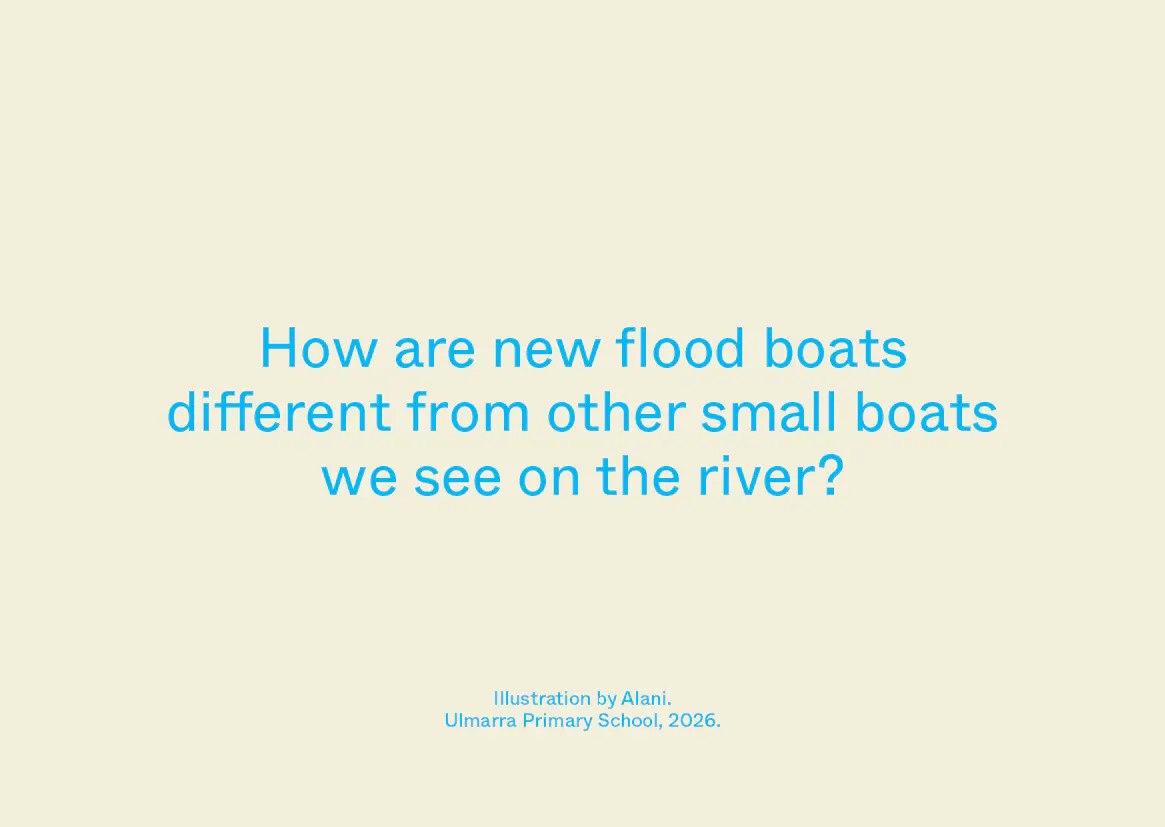
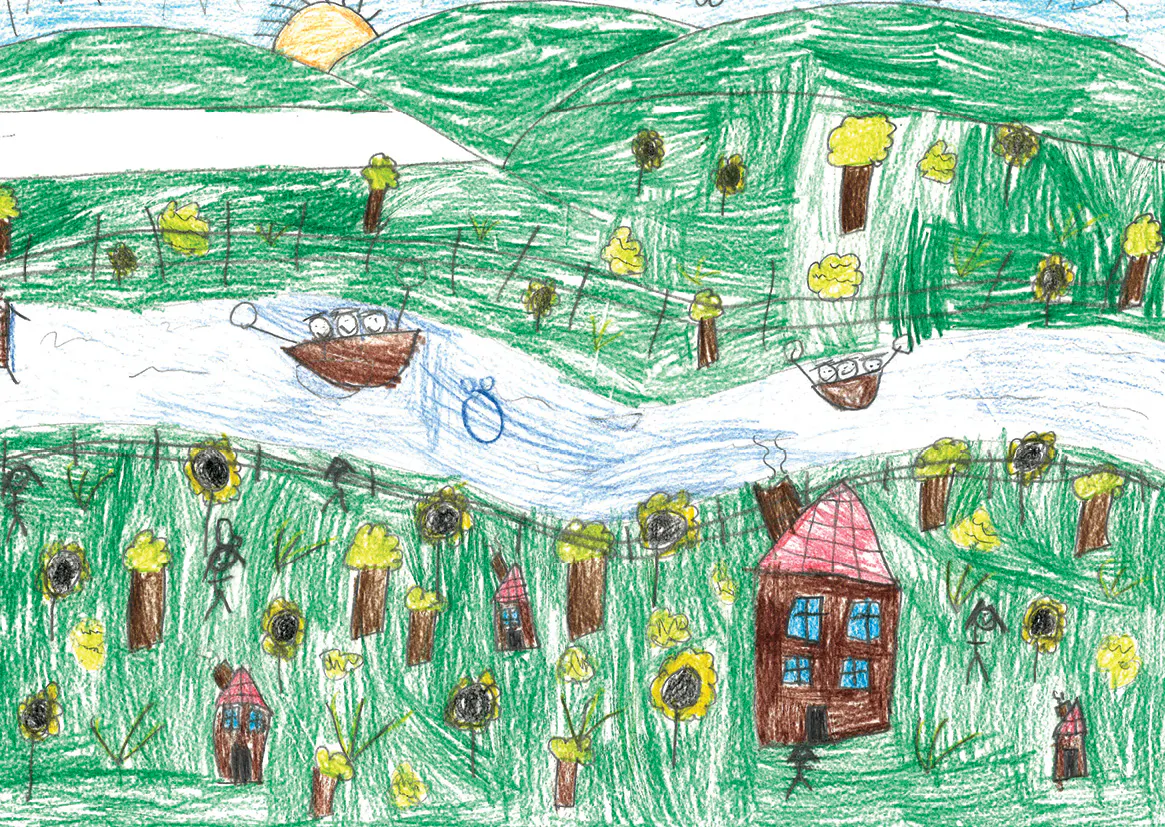
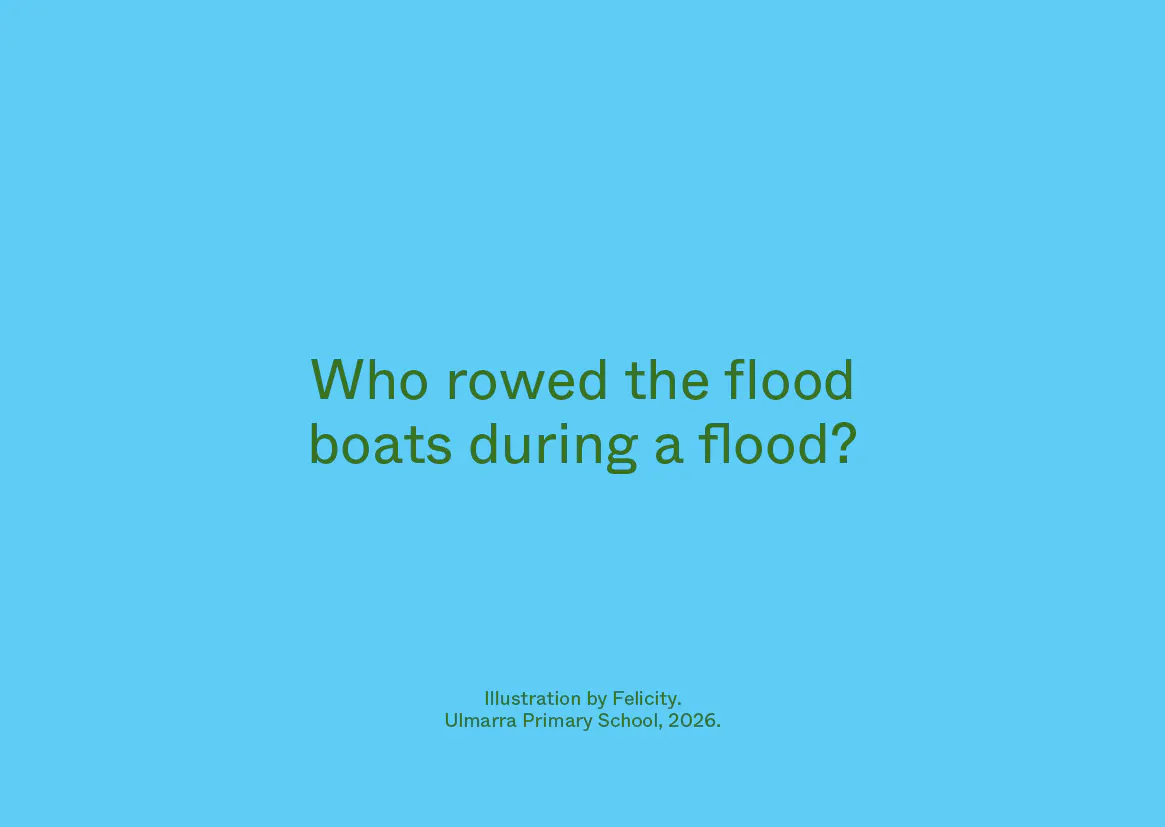
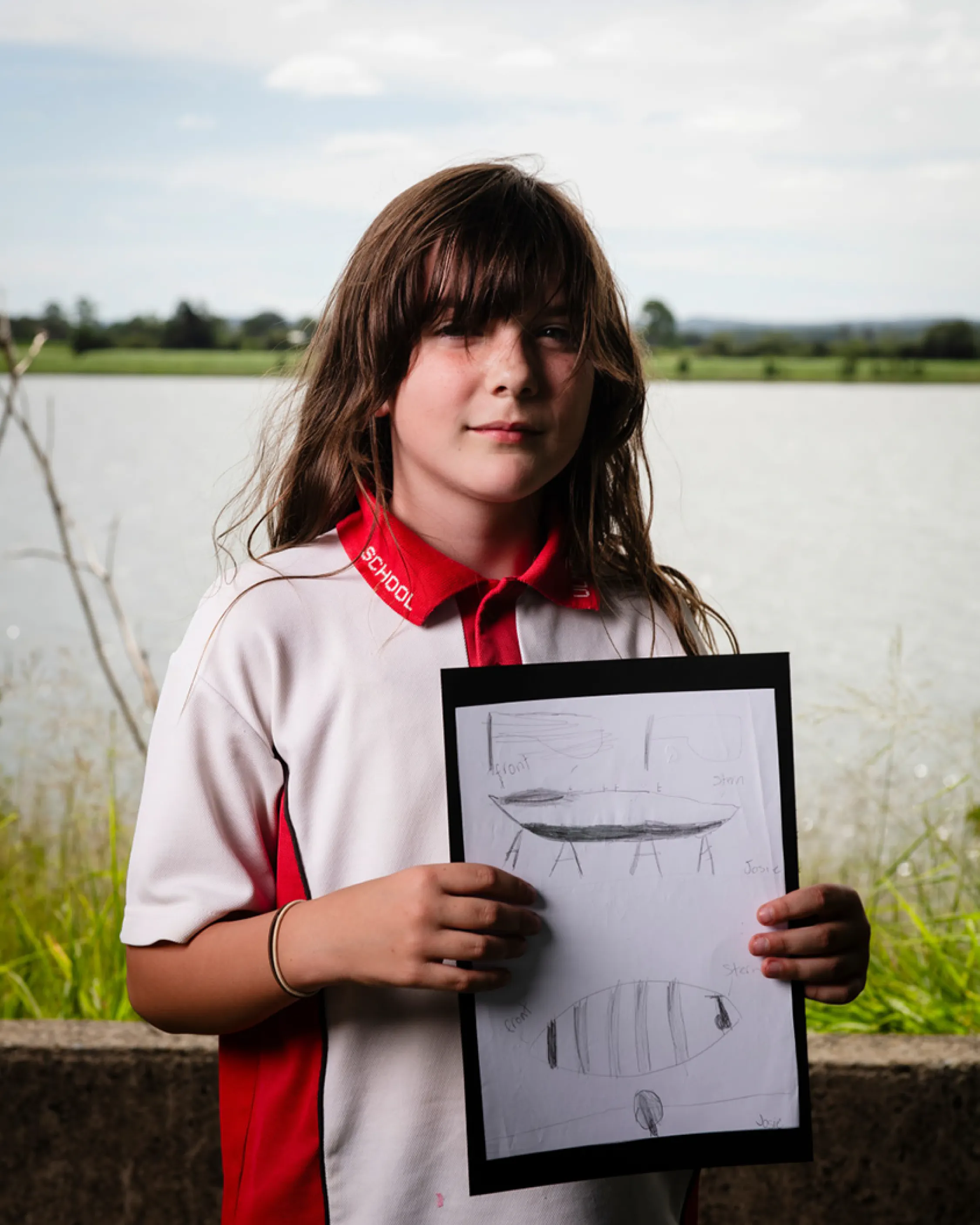
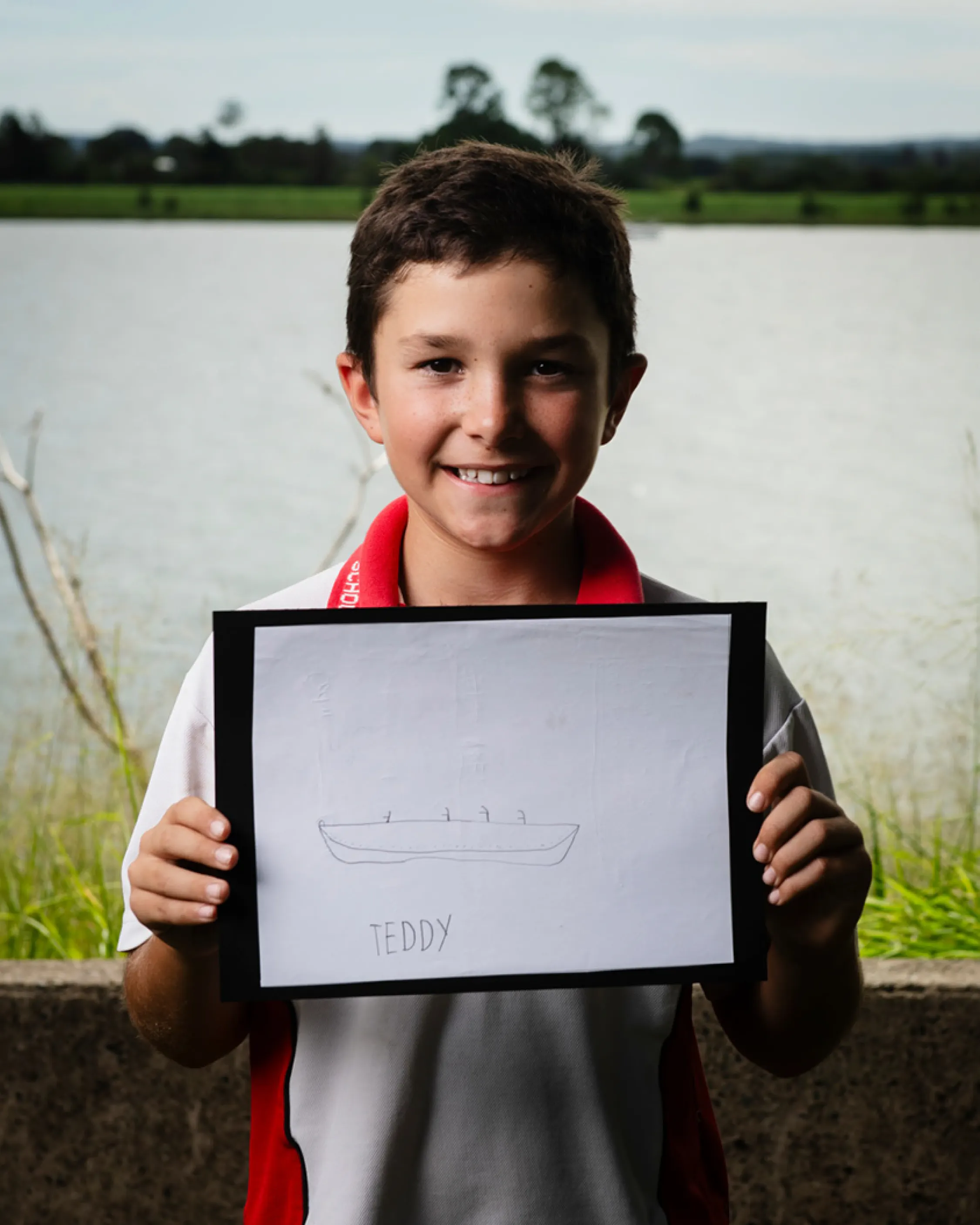
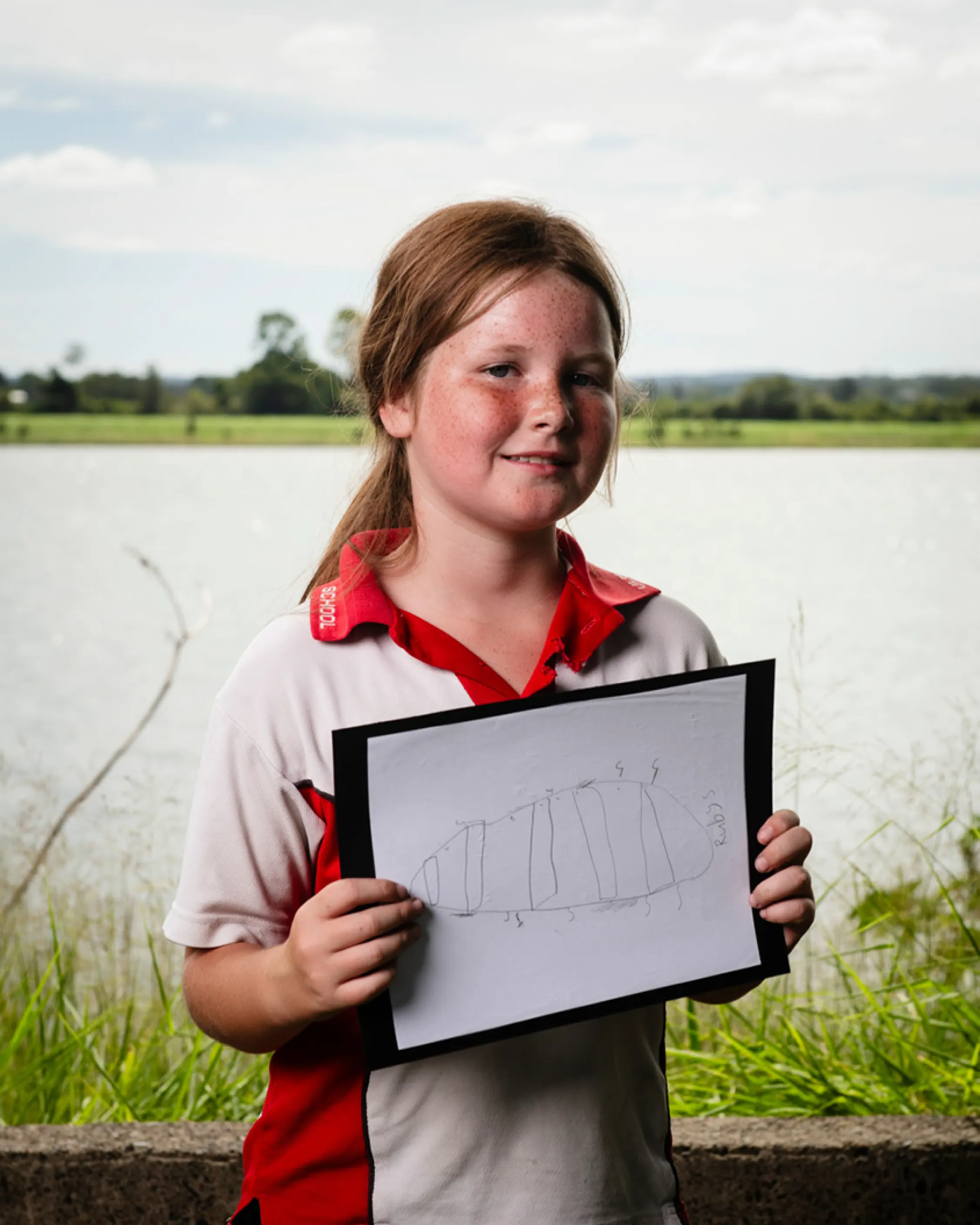
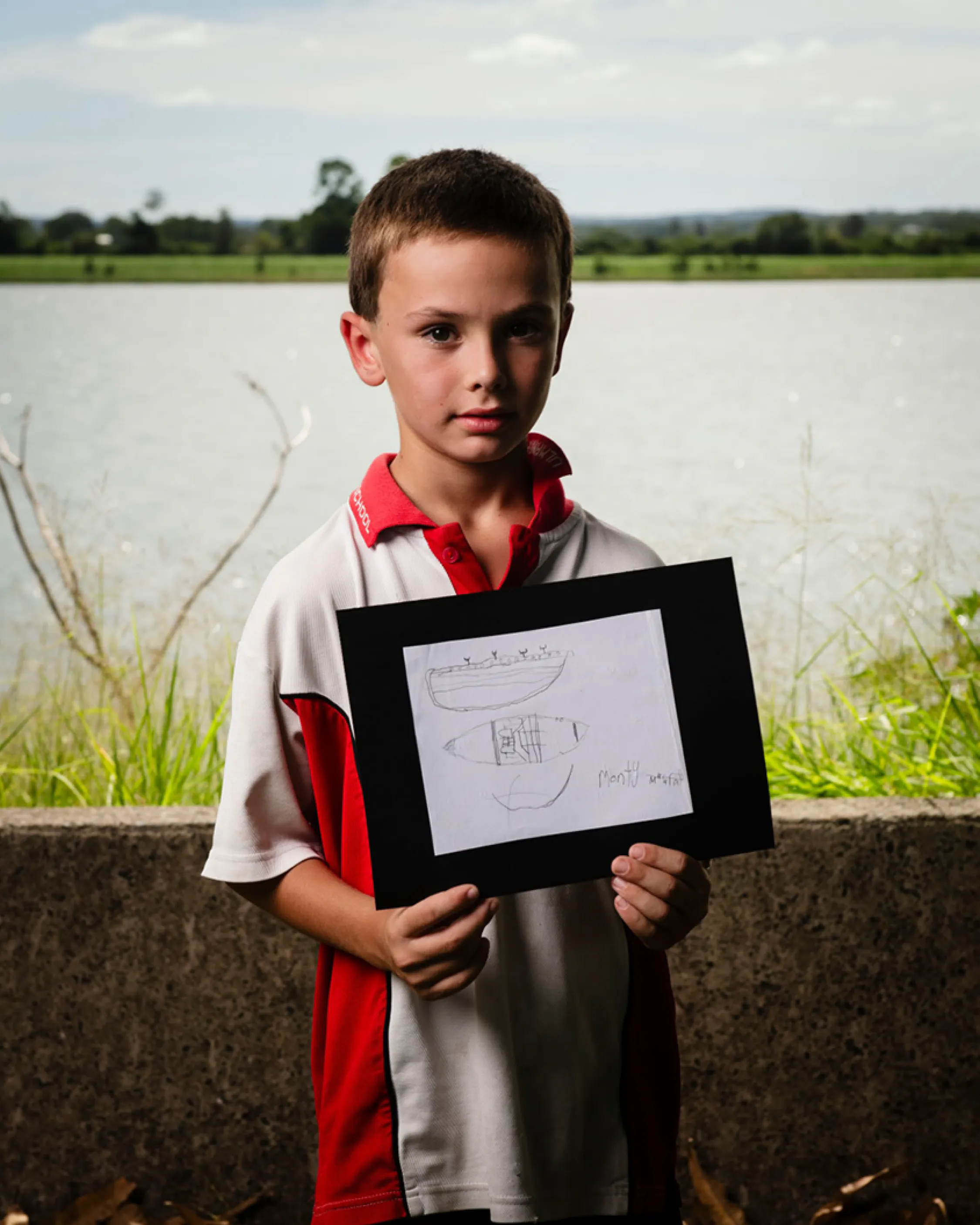
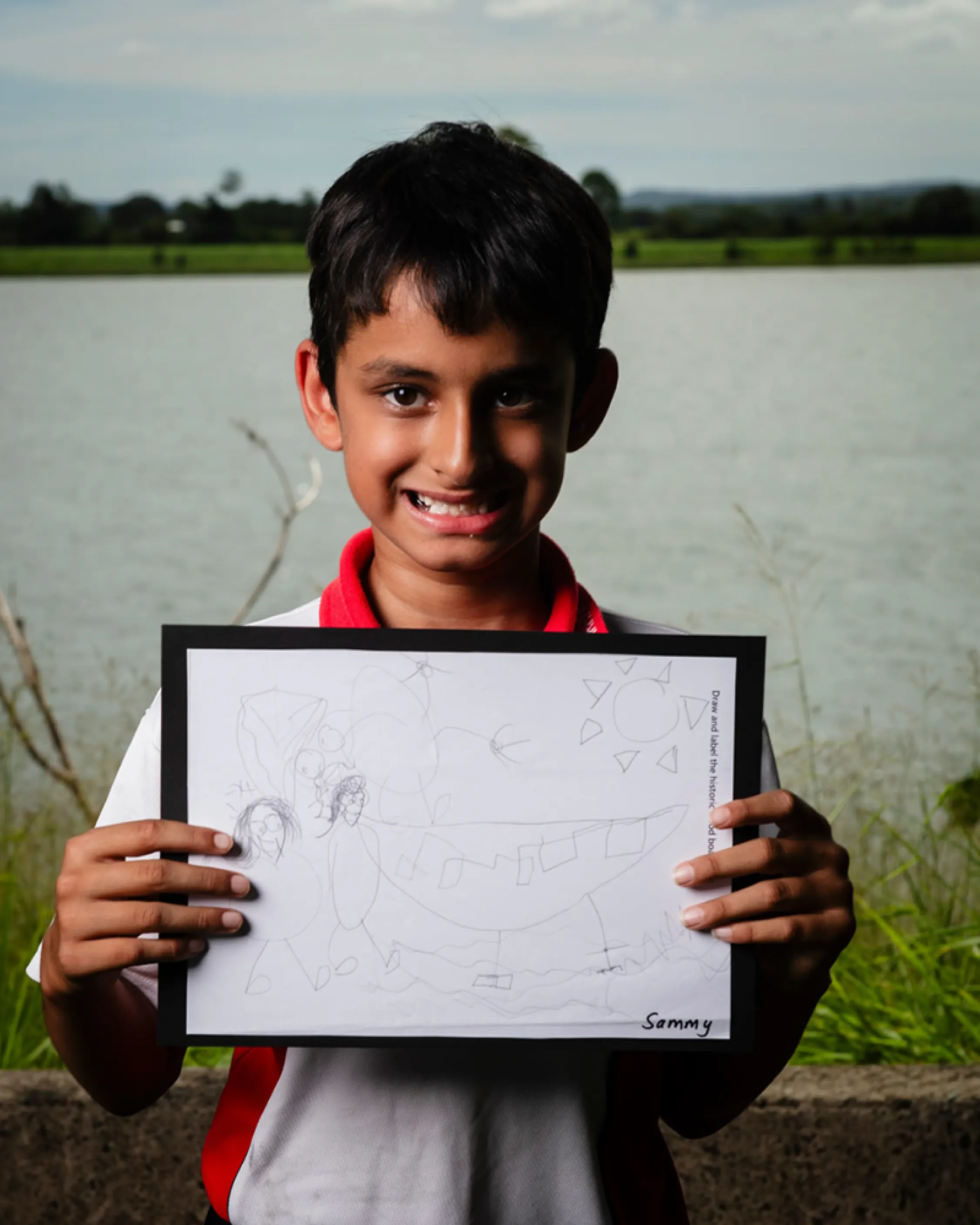
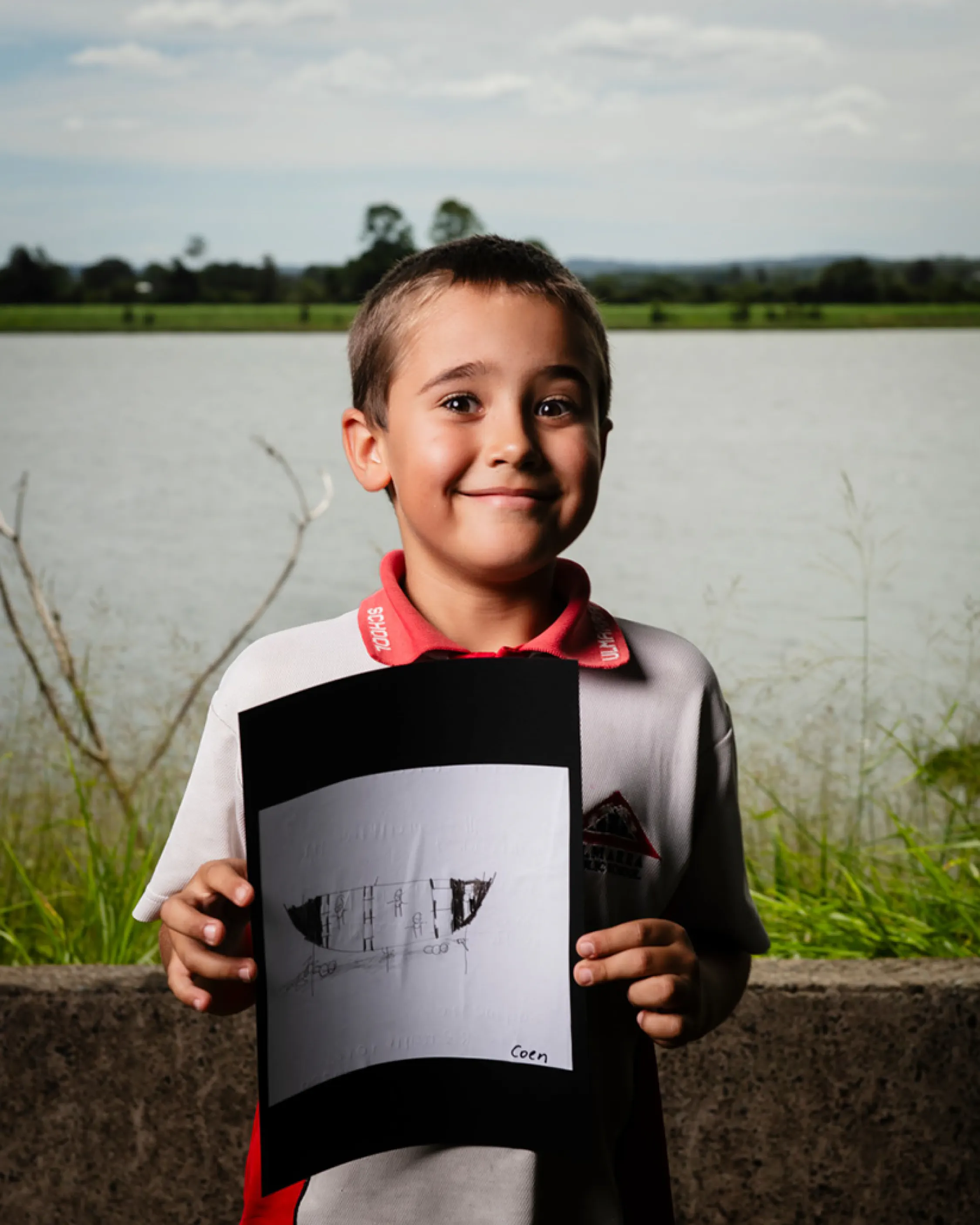
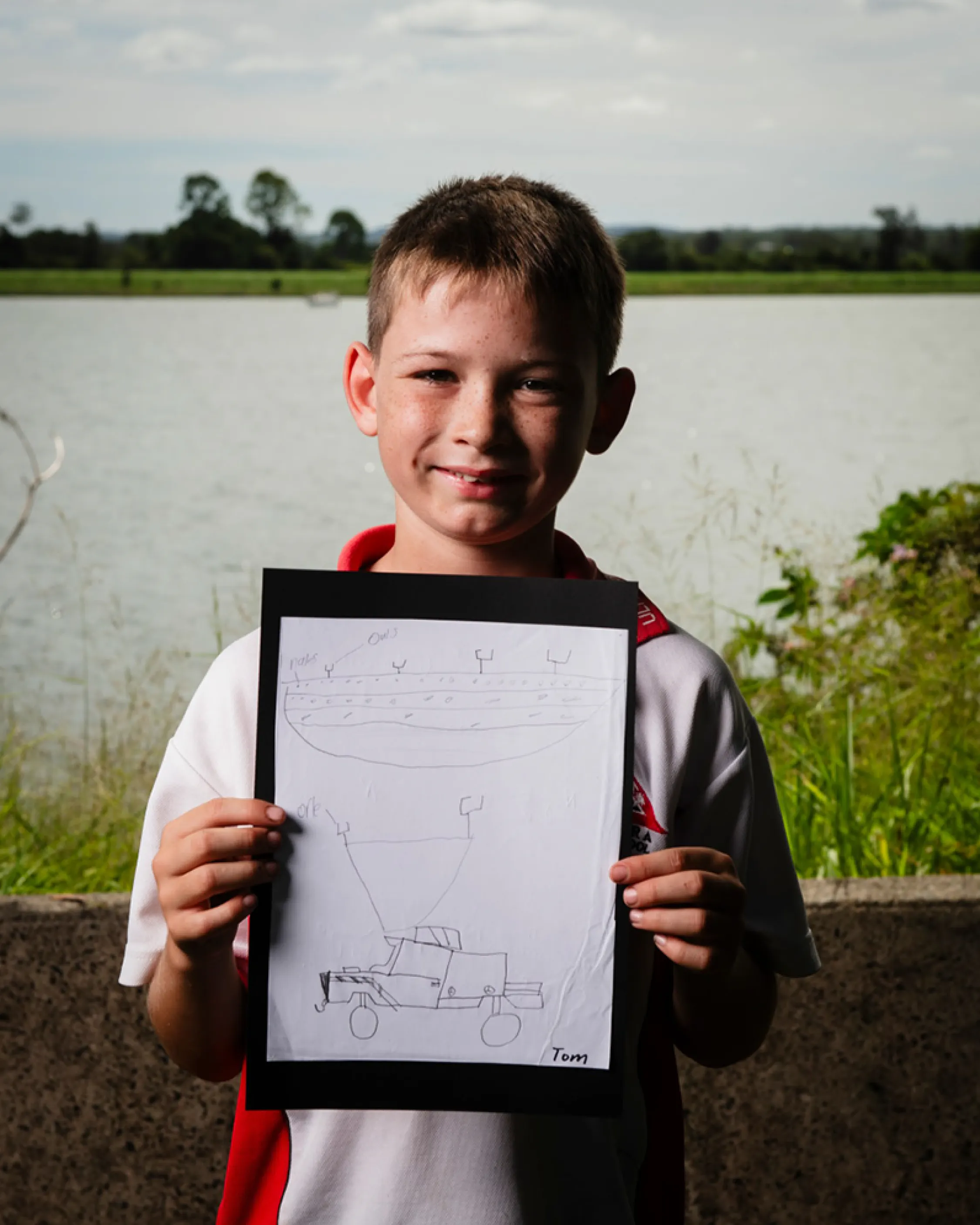
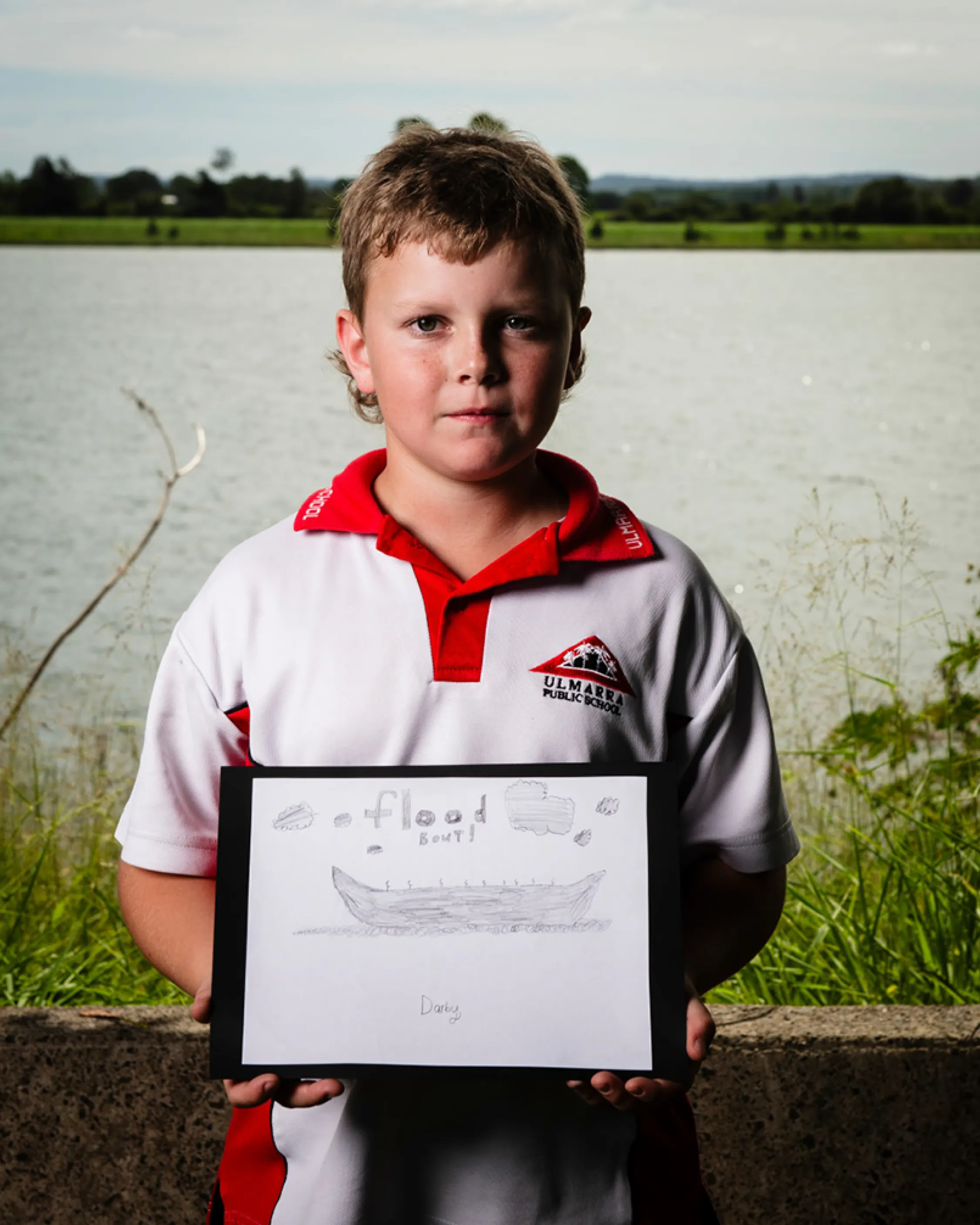
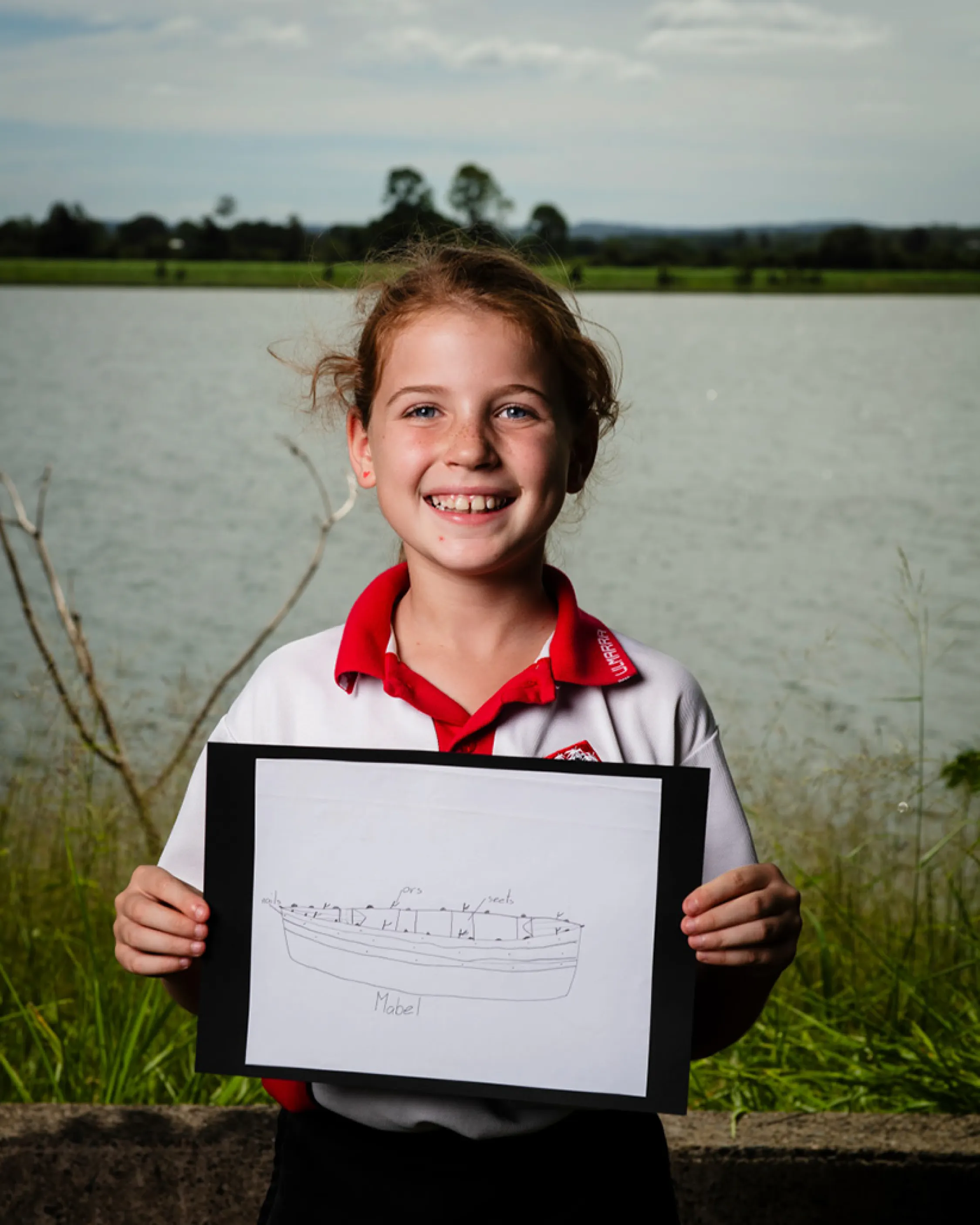
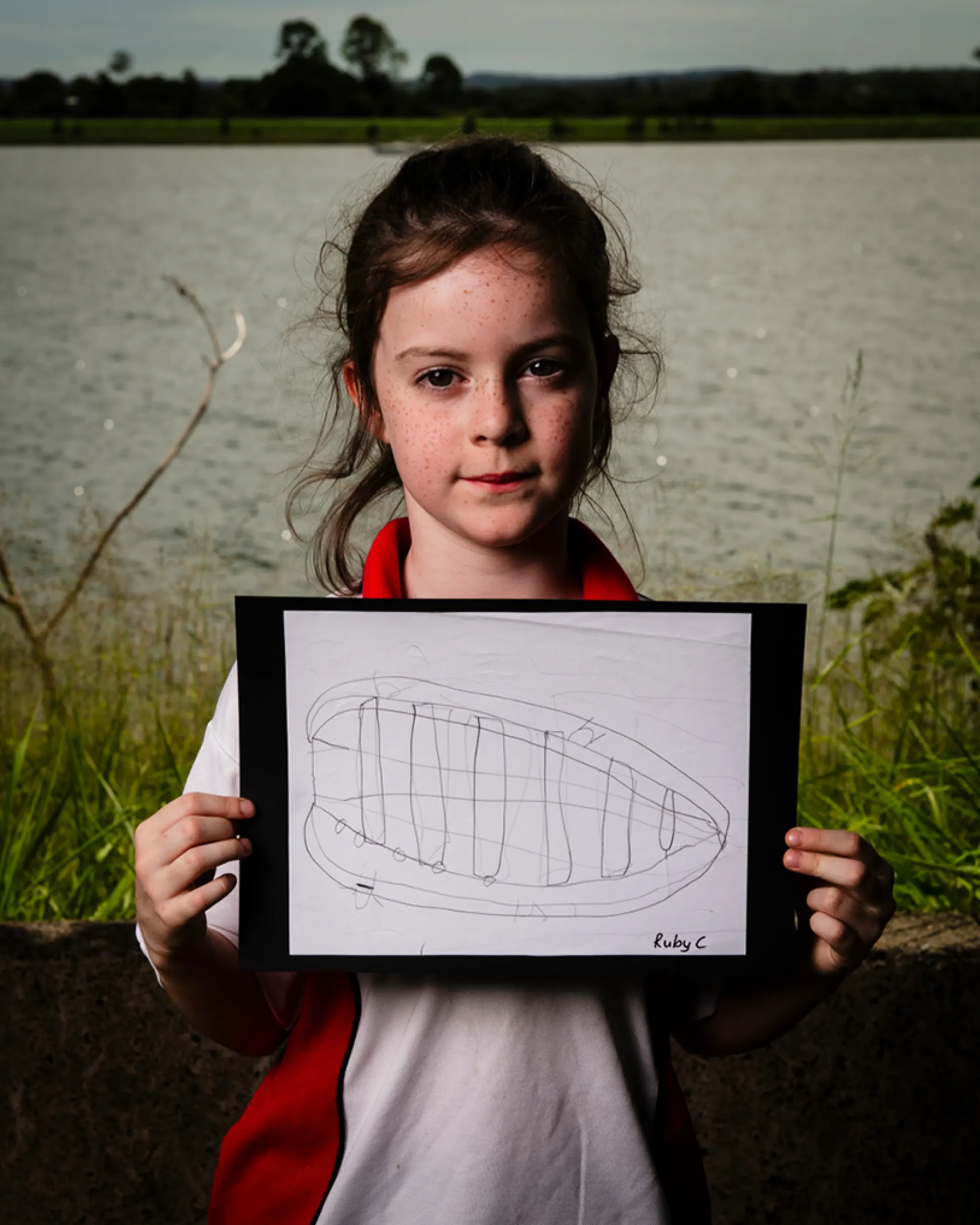
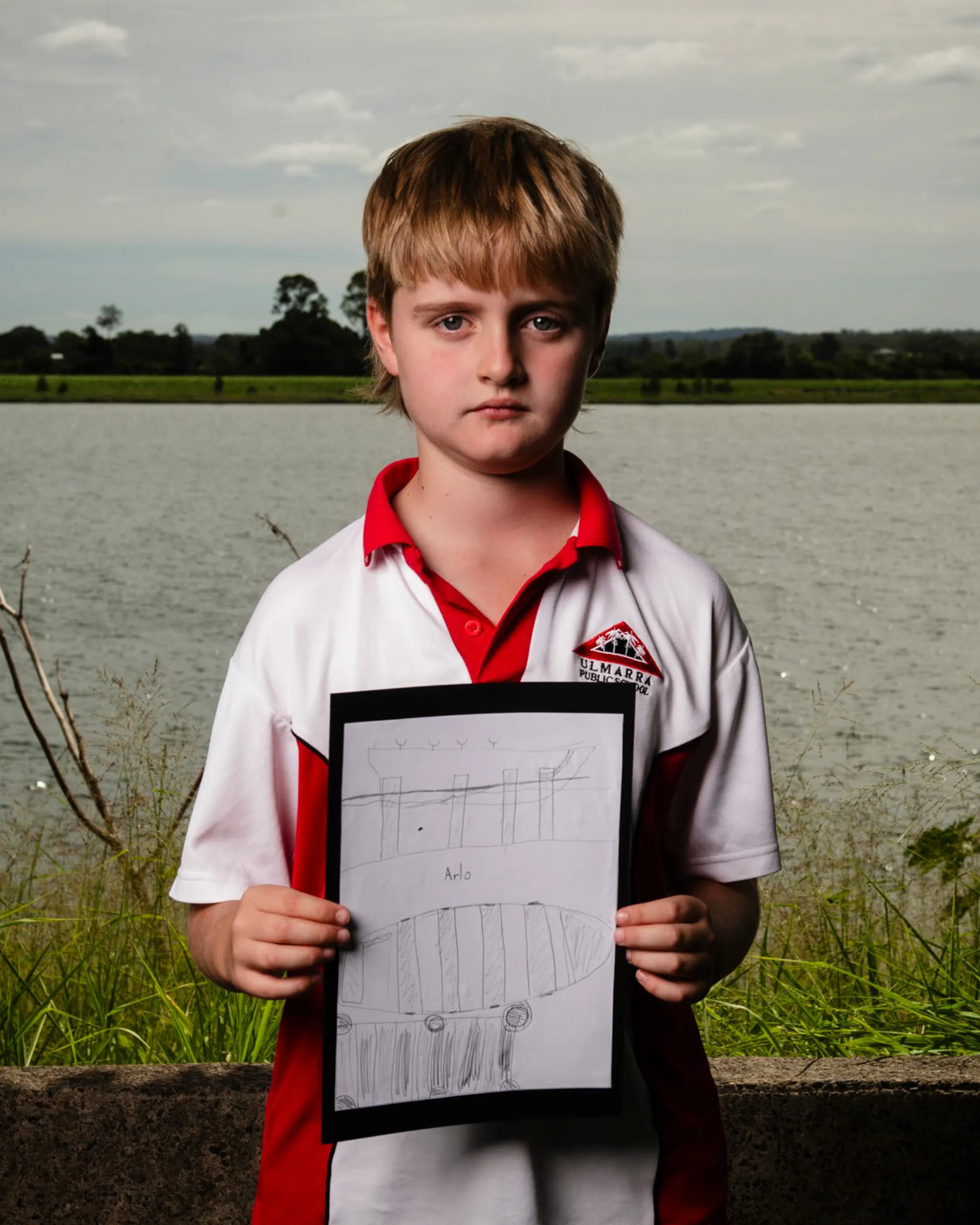
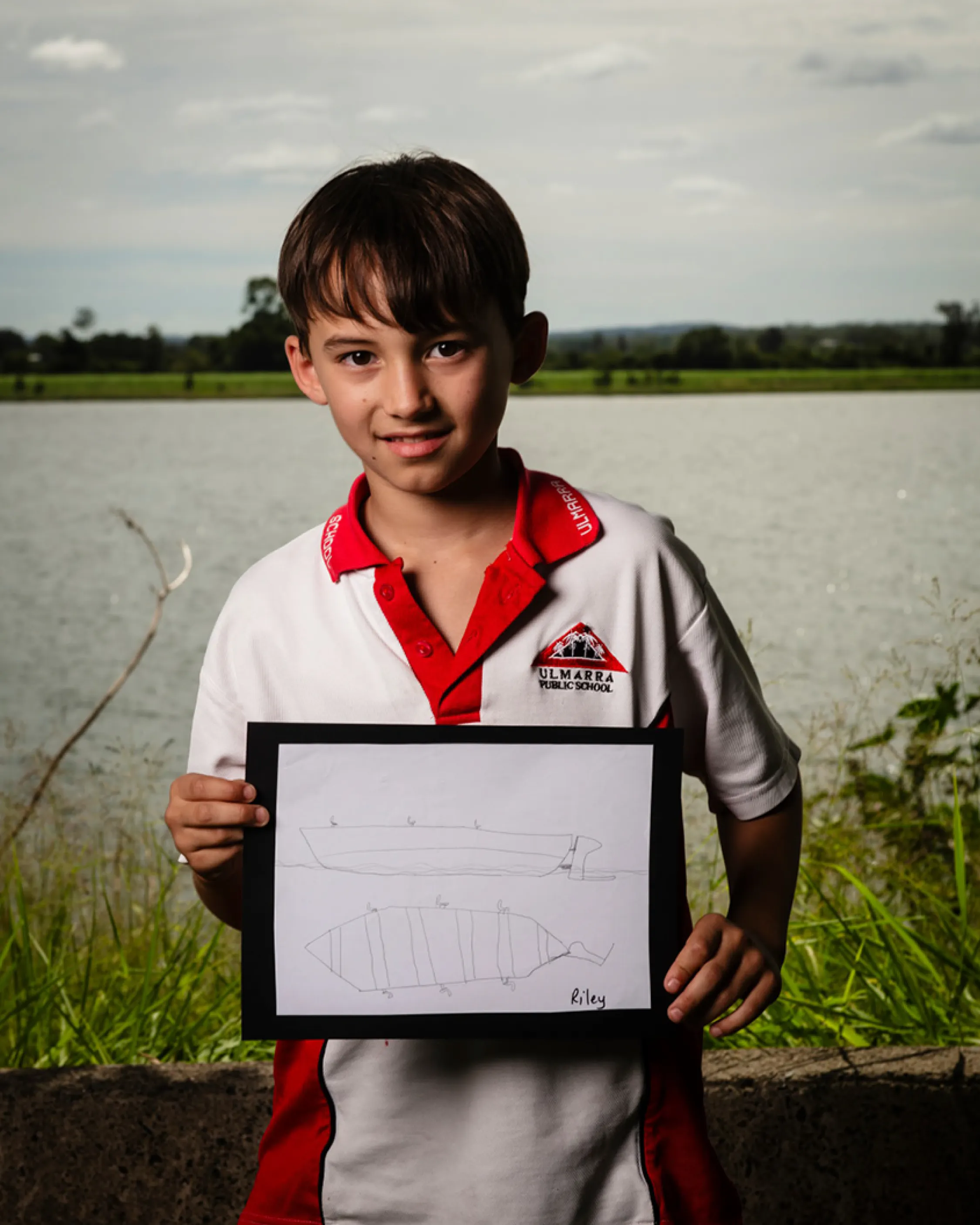
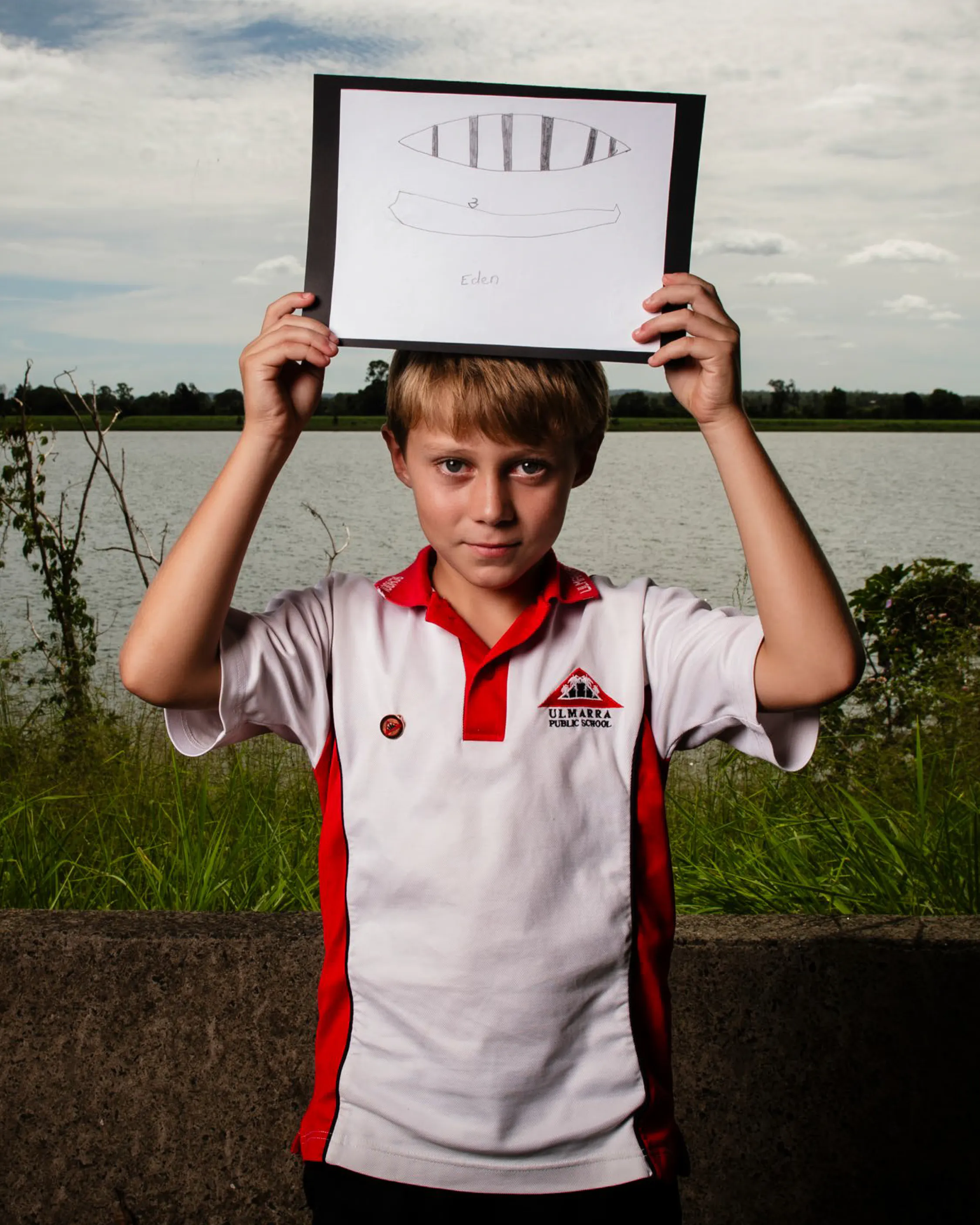
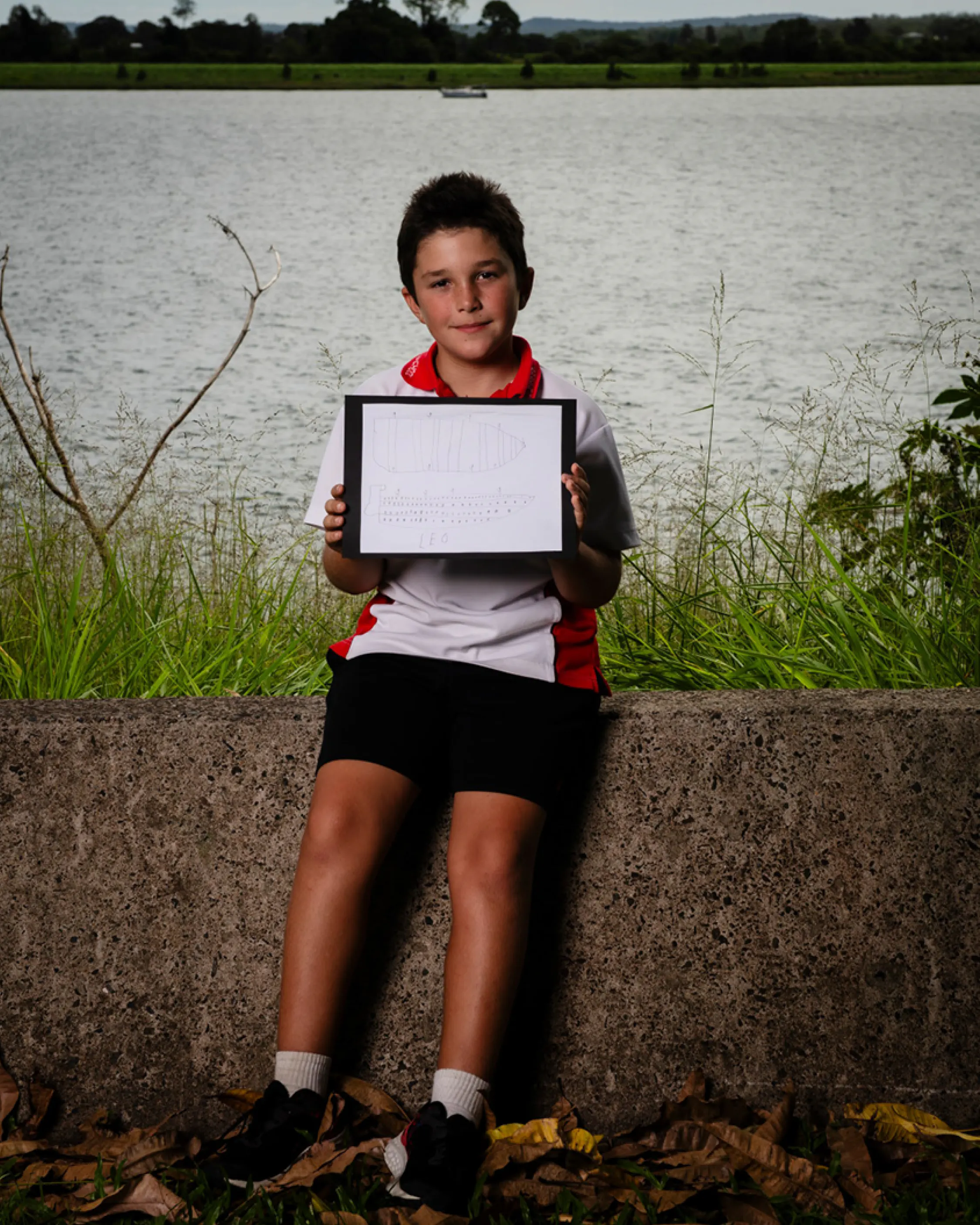
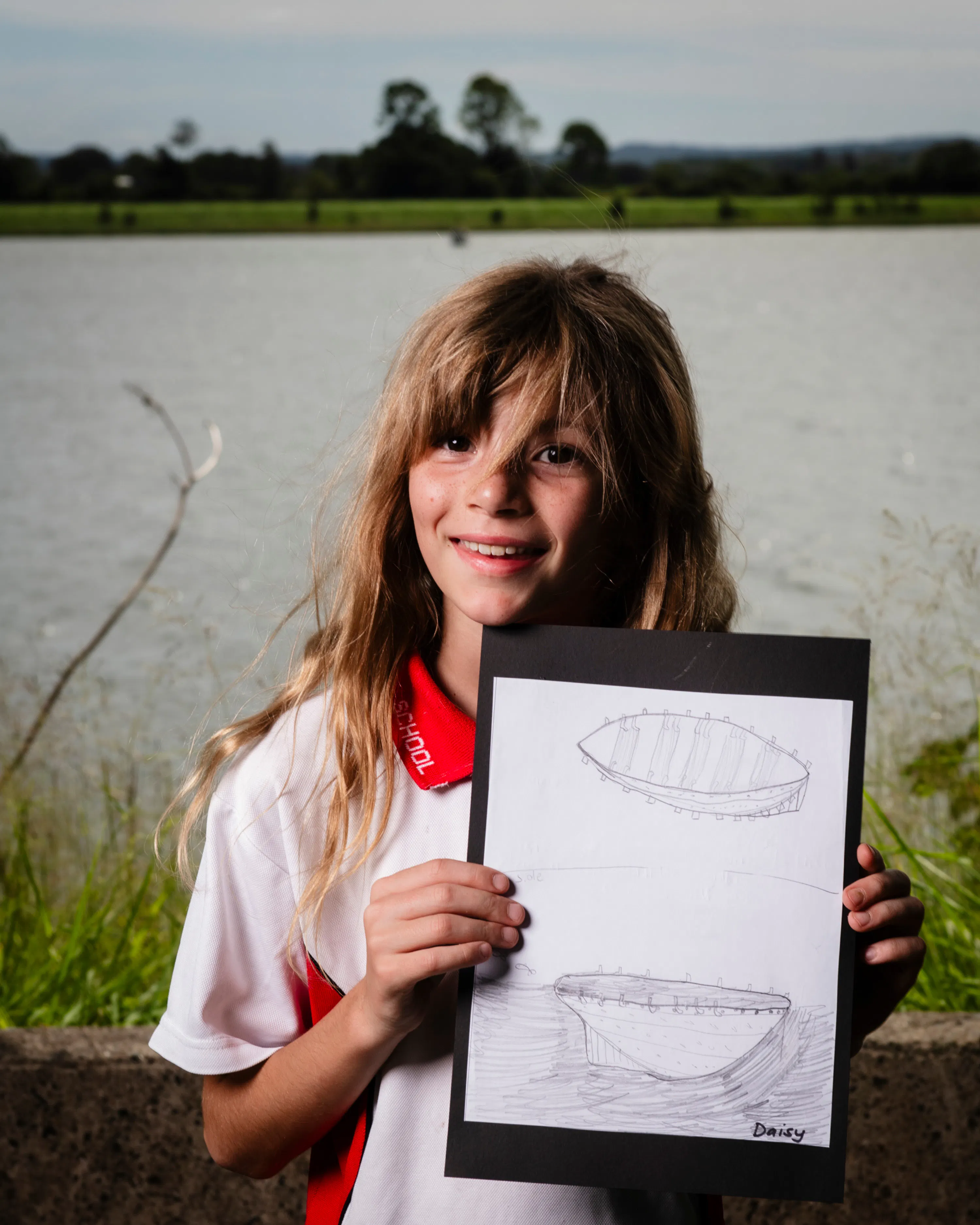
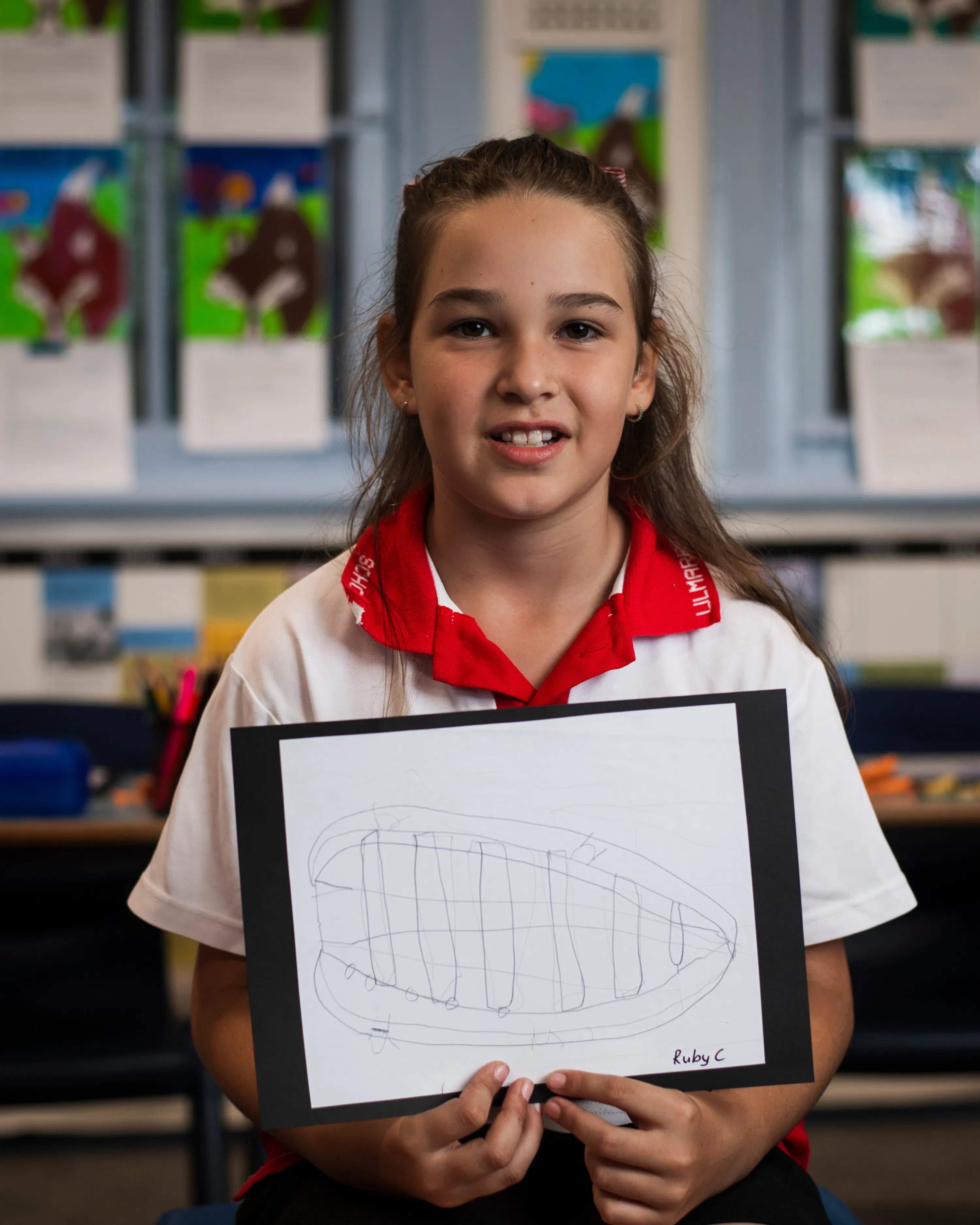
During the project, over two terms, the students investigated stories about Ulmarra village and the Clarence River/Breimba, including its history of floods. Among other project activities, students led a Yarning Circle with Yaegl Elders and other community members. Their questions and drawings have been made into a printed set of cards, for future use. (Scroll further down to see some images of these cards).
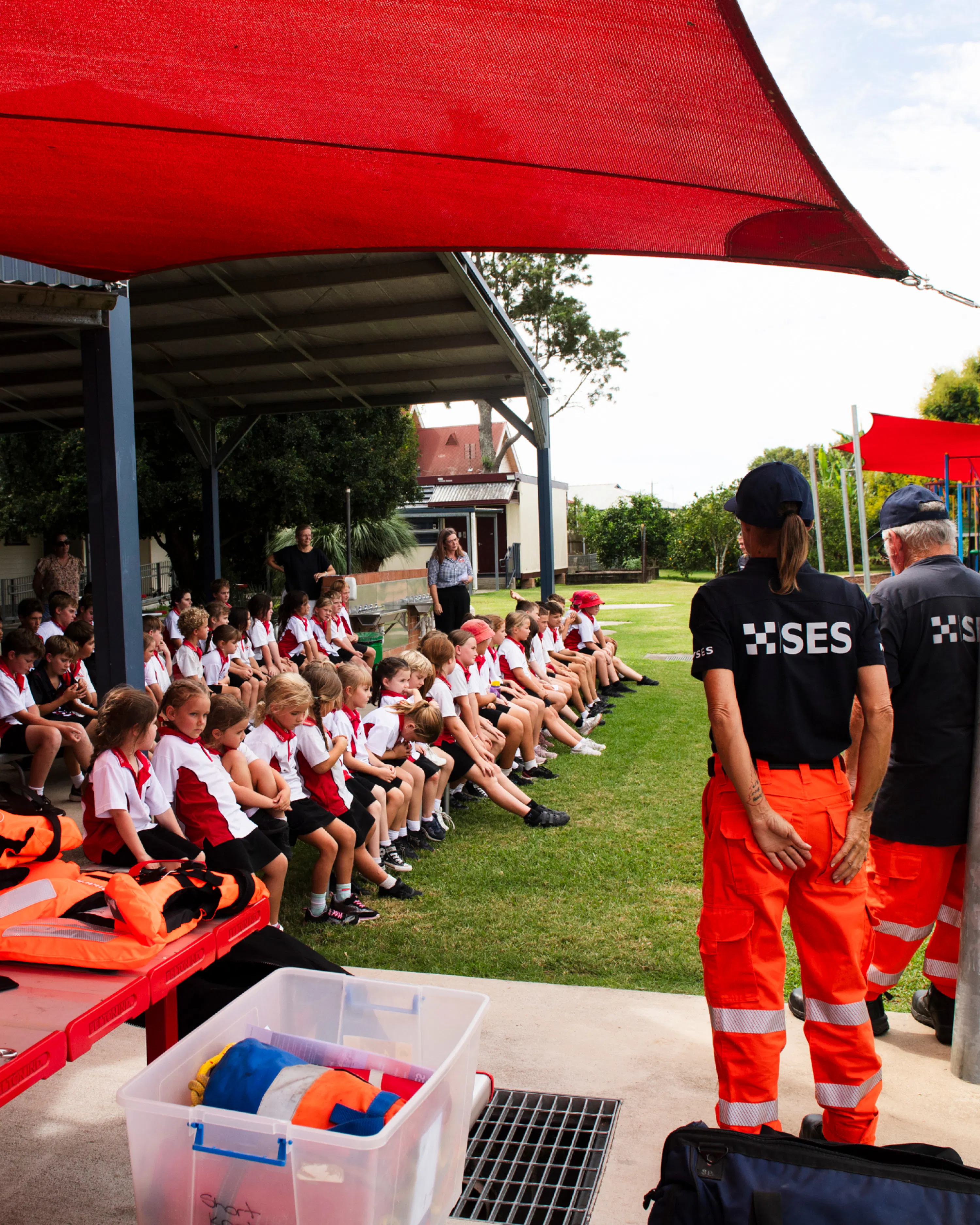
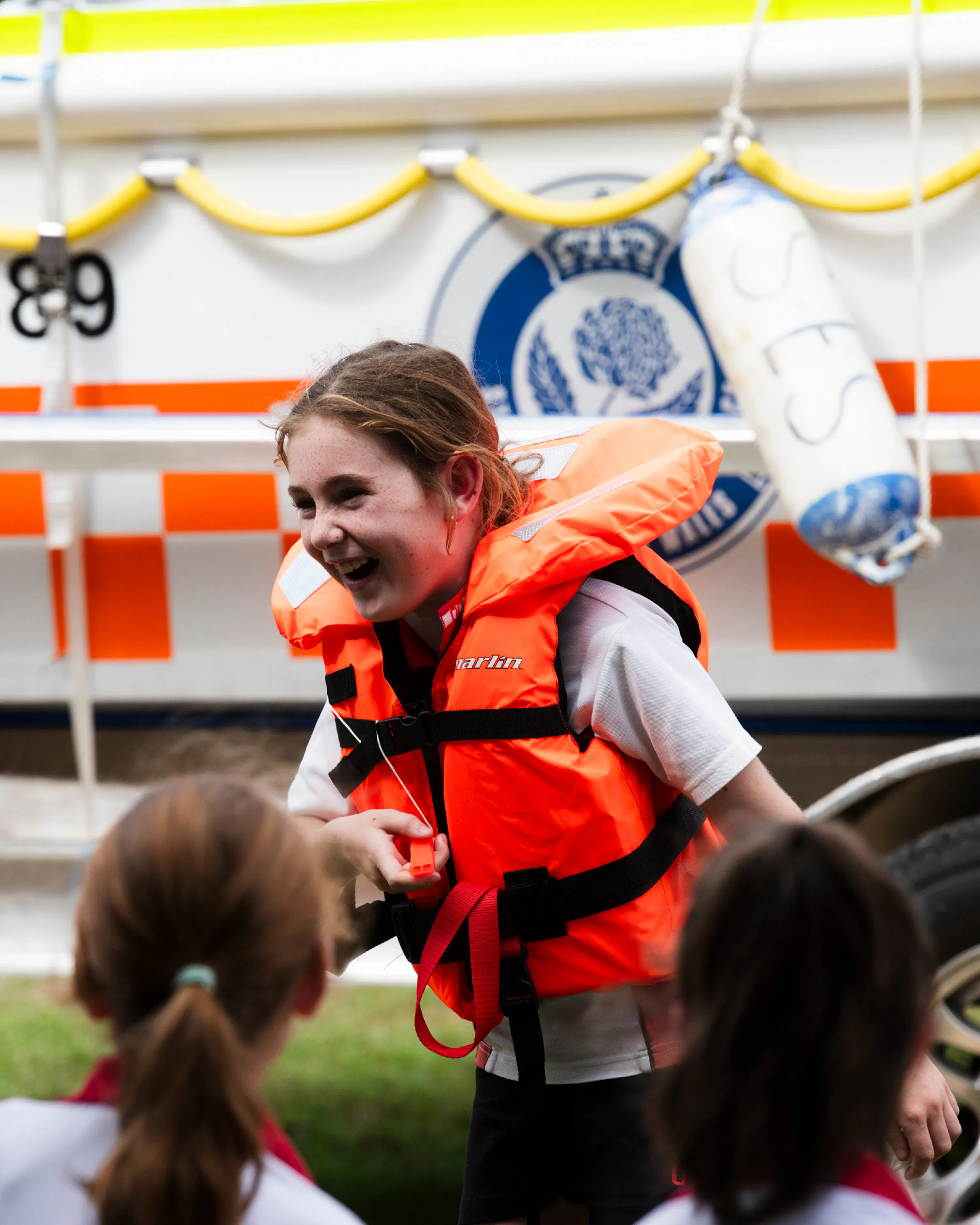
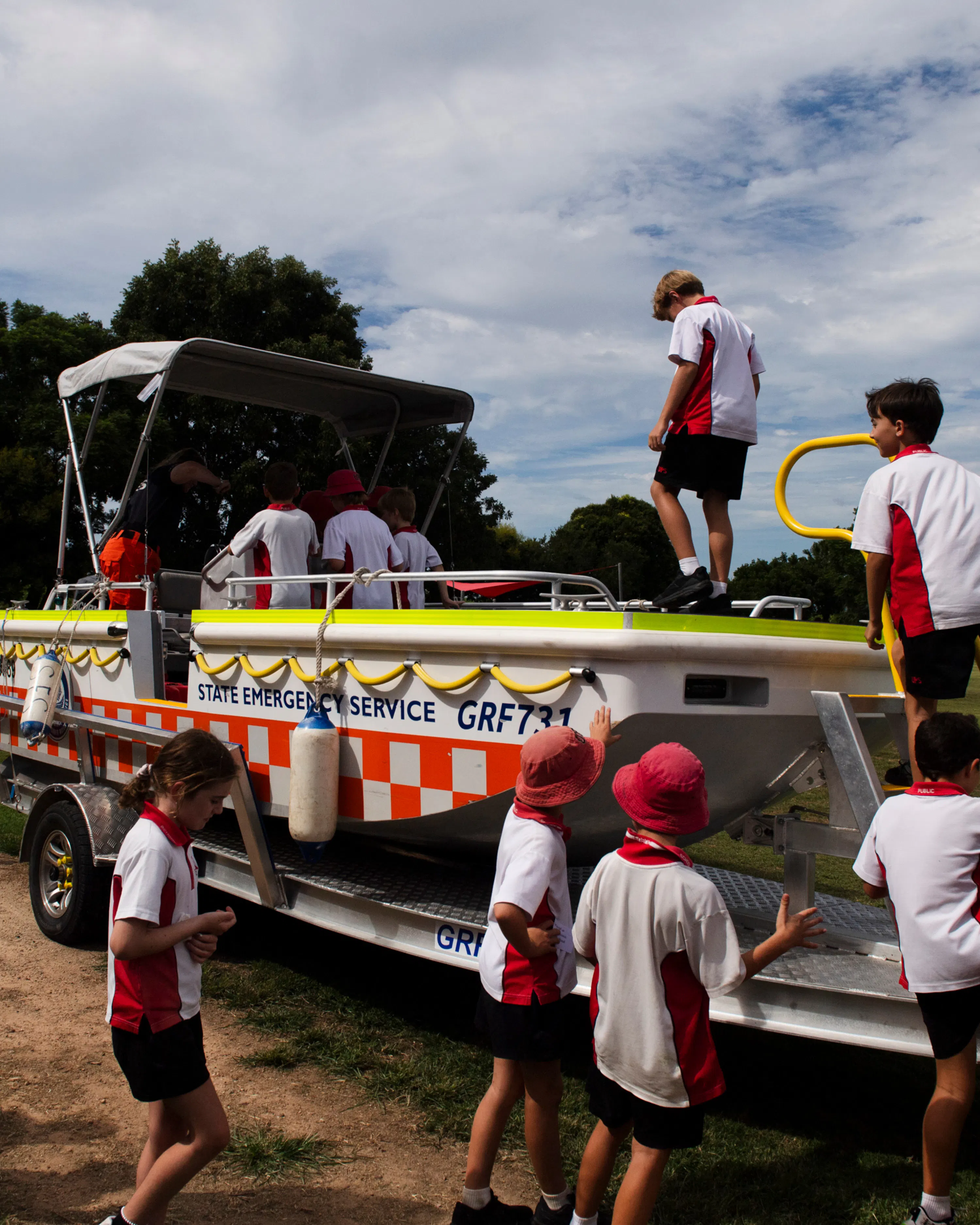
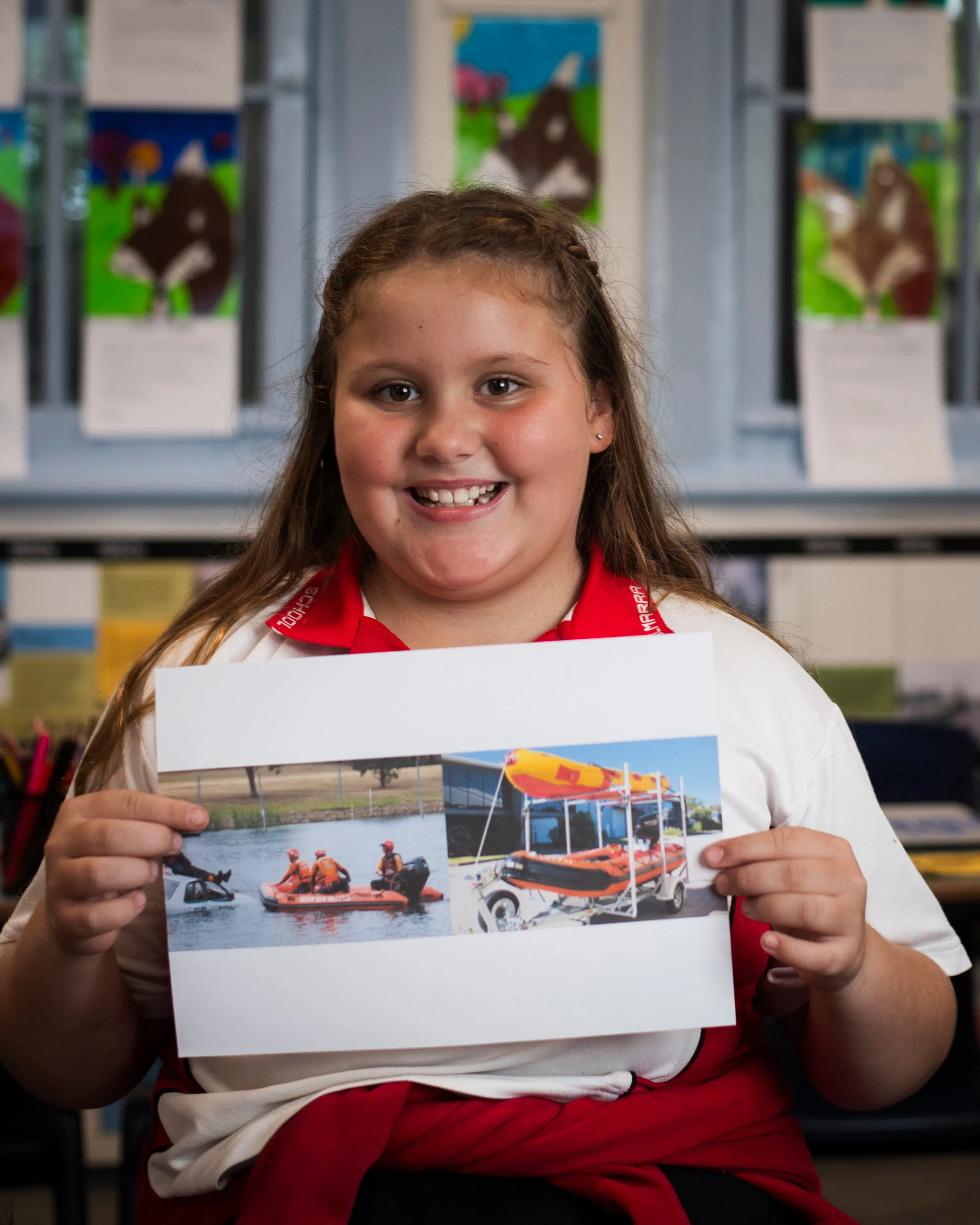
They visited the Lawrence Museum to see the historic flood boat Cedar Queen, and heard from museum volunteers about how it was used during past floods. From SES volunteers, they learnt about modern day flood boats and the vital role flood boats still have today.
In the classroom, students investigated and added to a timeline, using historical records, photos and oral histories. They created colourful illustrations based on their new knowledge of Ulmarra’s past, including how Yaegl people and settler communities are connected to and experience the river and its wider landscape.
The project finale was an exciting collaboration with artist Jeremy Austin to create The Flood Boat Story animation, using the student’s drawings and a narrative developed with historian Kate Gahan but spoken by the students. Based on real events, The Flood Boat Story tells of when the Ulmarra community first received and used flood boats to prepare for and get through flood times.
Watch the animation below.
The Flood Boat Story animation, created by Year 3&4 students, Kate Gahan and Jeremy Austin.
A model for other schools and communities
Living Memory Ulmarra offers a model for place-based learning in flood-affected areas. We have developed a resource that other schools and communities can adapt. If you're interested to learn more please get in touch by email livinglabnr[at]scu.edu.au
Project collaborators
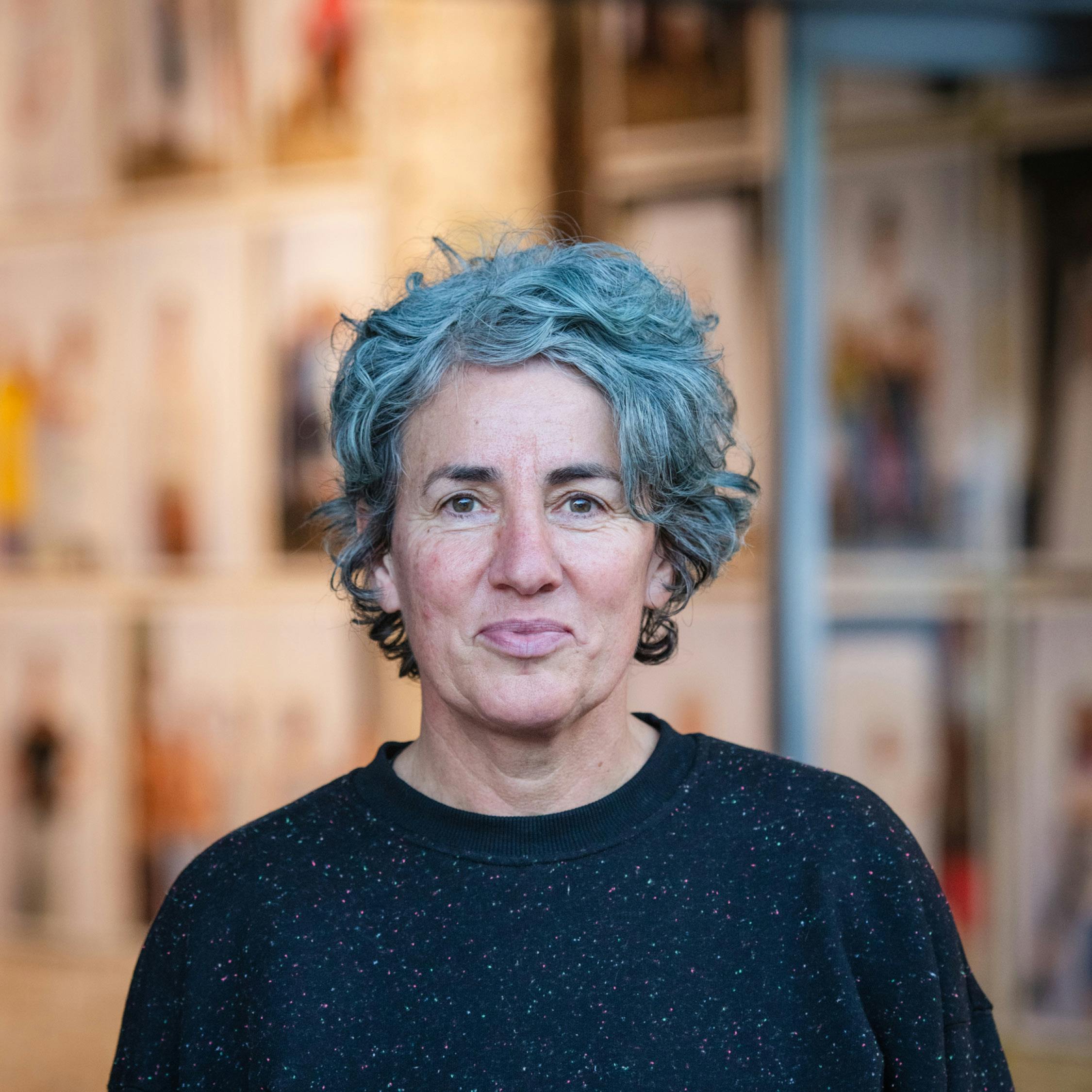
Kate Gahan
Kate is a professional community-based historian with over 25 years' experience working across regional NSW. Of Celtic/Irish descent, Kate was born and raised on Bundjalung Country, where she still lives. Kate has worked with local governments, museums and First Nations organisations and communities, and is widely recognised for her contributions to regional history and storytelling. She also manages a program called Storyplace, an award-winning Museums and Galleries of NSW website that shares stories from regional museum and gallery collections.
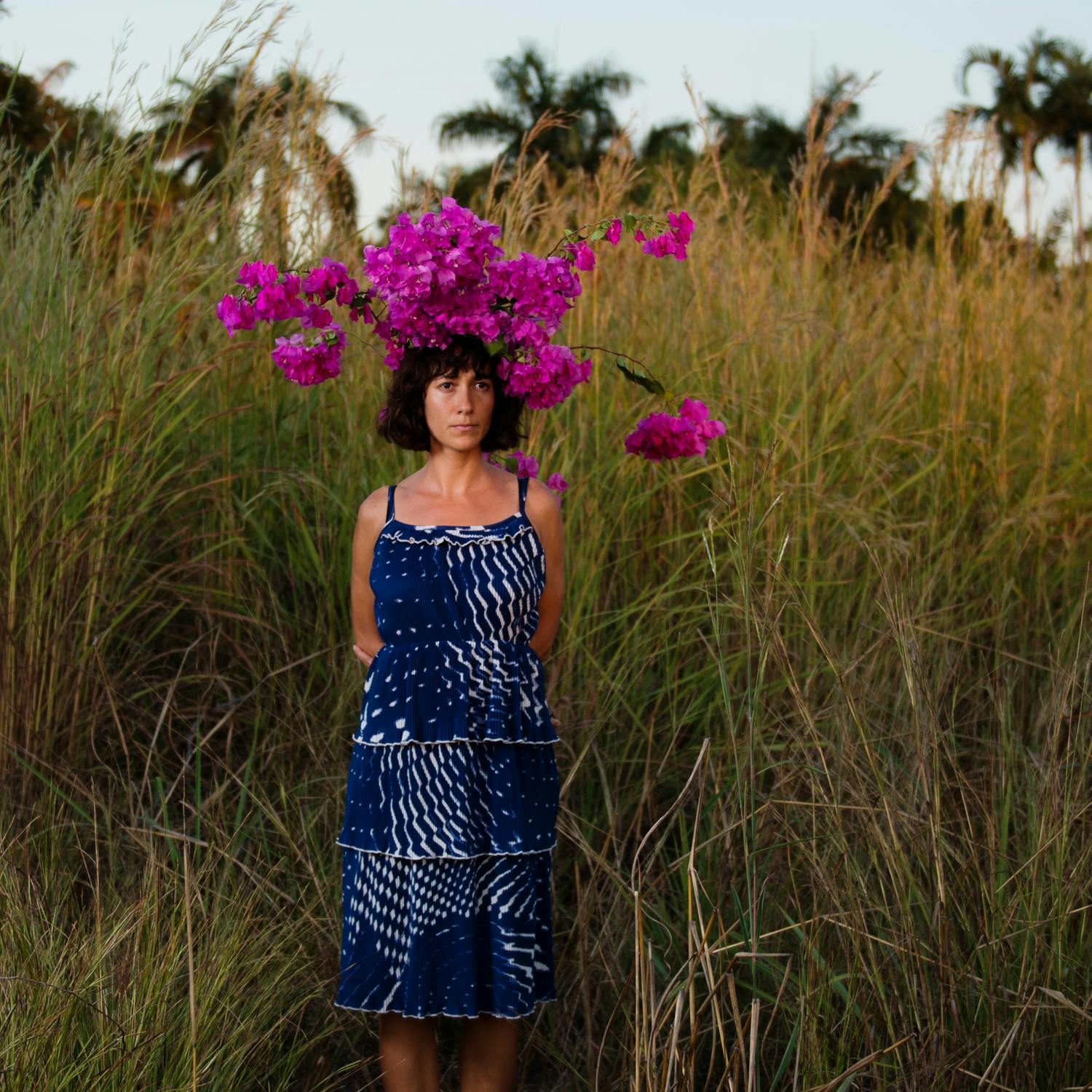
Elise Derwin
Elise is an award-winning photographer based on Bundjalung Country in Lismore, NSW, specialising in documentary and editorial photography.
Her images have featured in the Sydney Morning Herald, The Guardian, The Australian and other major newspapers. Elise has worked extensively across Australia, particularly in the Northern Territory, and completed assignments in the United States, Timor-Leste and Indonesia.
Fuelled by genuine connection to people and places, Elise aims to capture whole stories, not just moments. By taking time to know her subjects, she tells important, often personal stories through images filled with humanity and compassion.
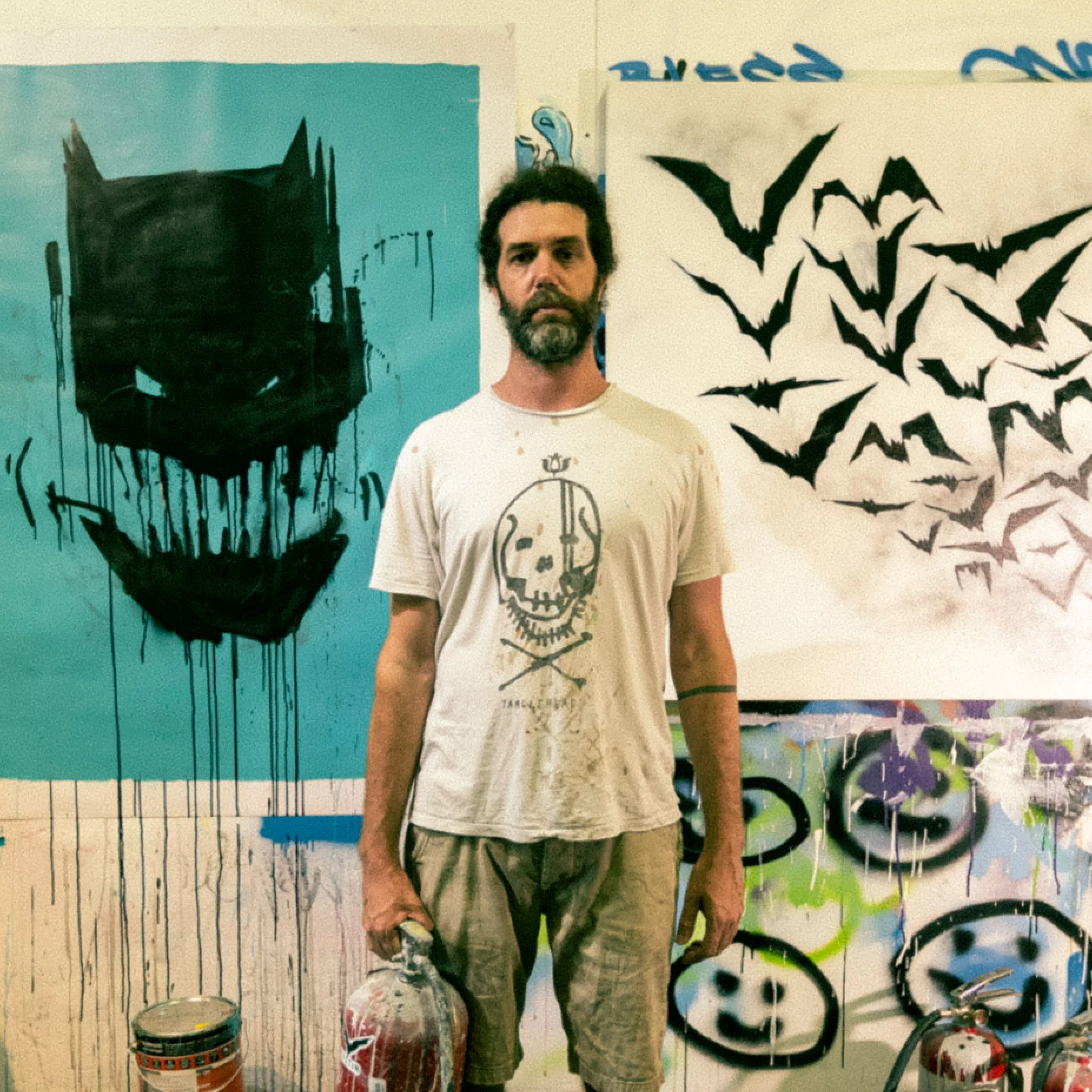
Jeremy Austin
Jeremy is a Northern Rivers-based Australian artist whose multidisciplinary practice spans painting, murals, printmaking, digital art, and animation. Influenced by street culture, drawing, and the Australian landscape, he creates distinctive character-driven artworks that bridge physical and digital spaces.
Bianca Rhodes, Principal, and Class 3&4, Ulmarra Primary School
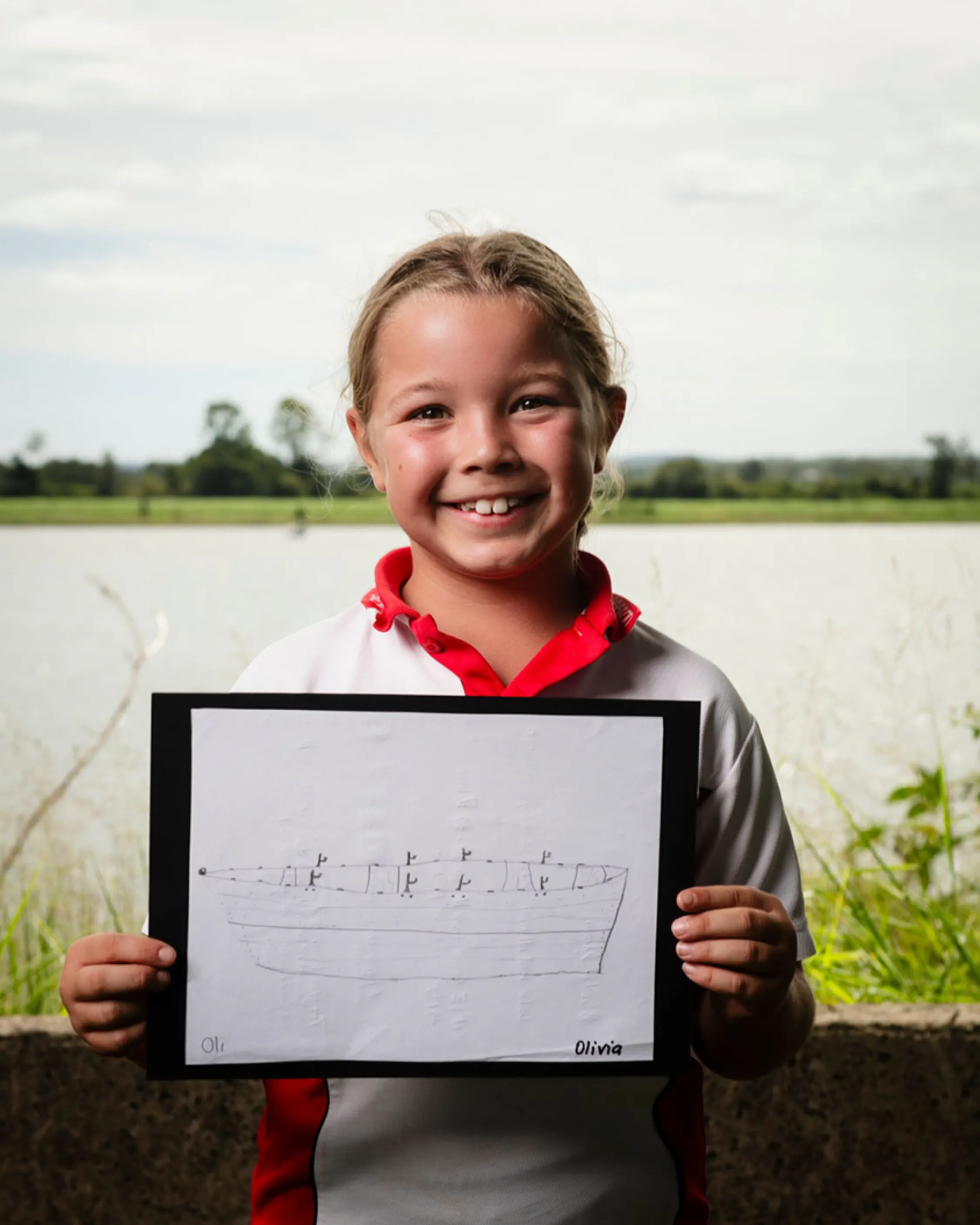
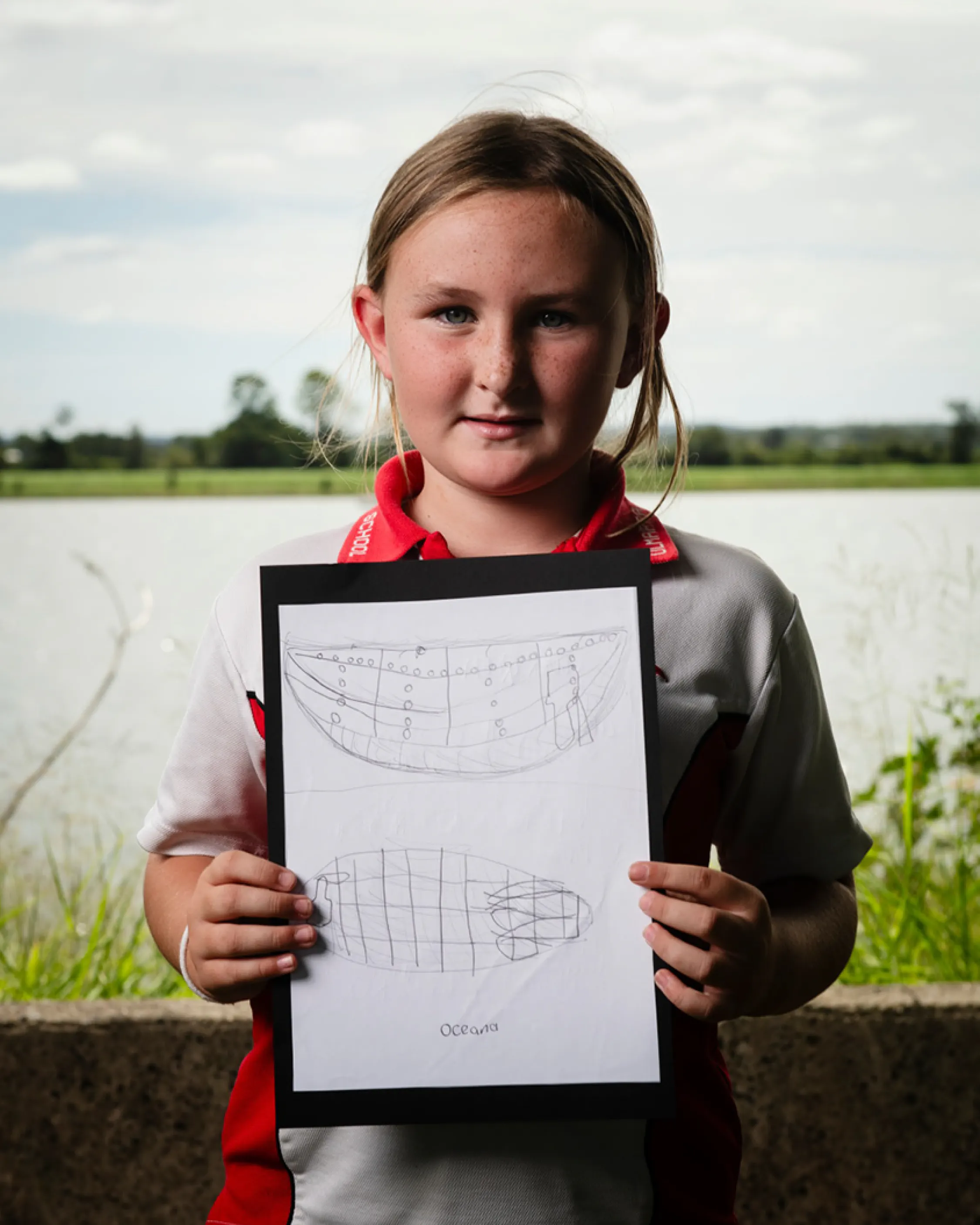
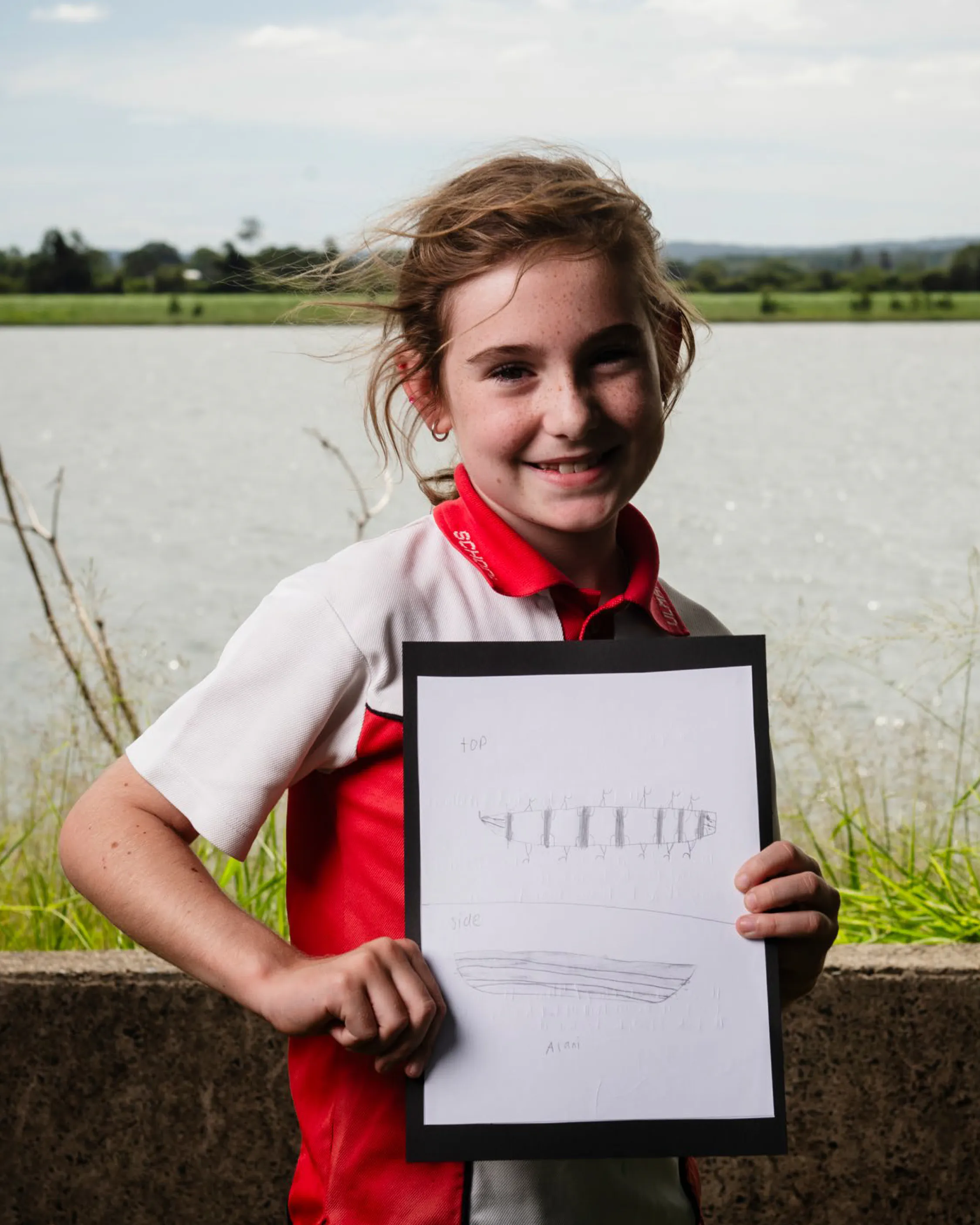
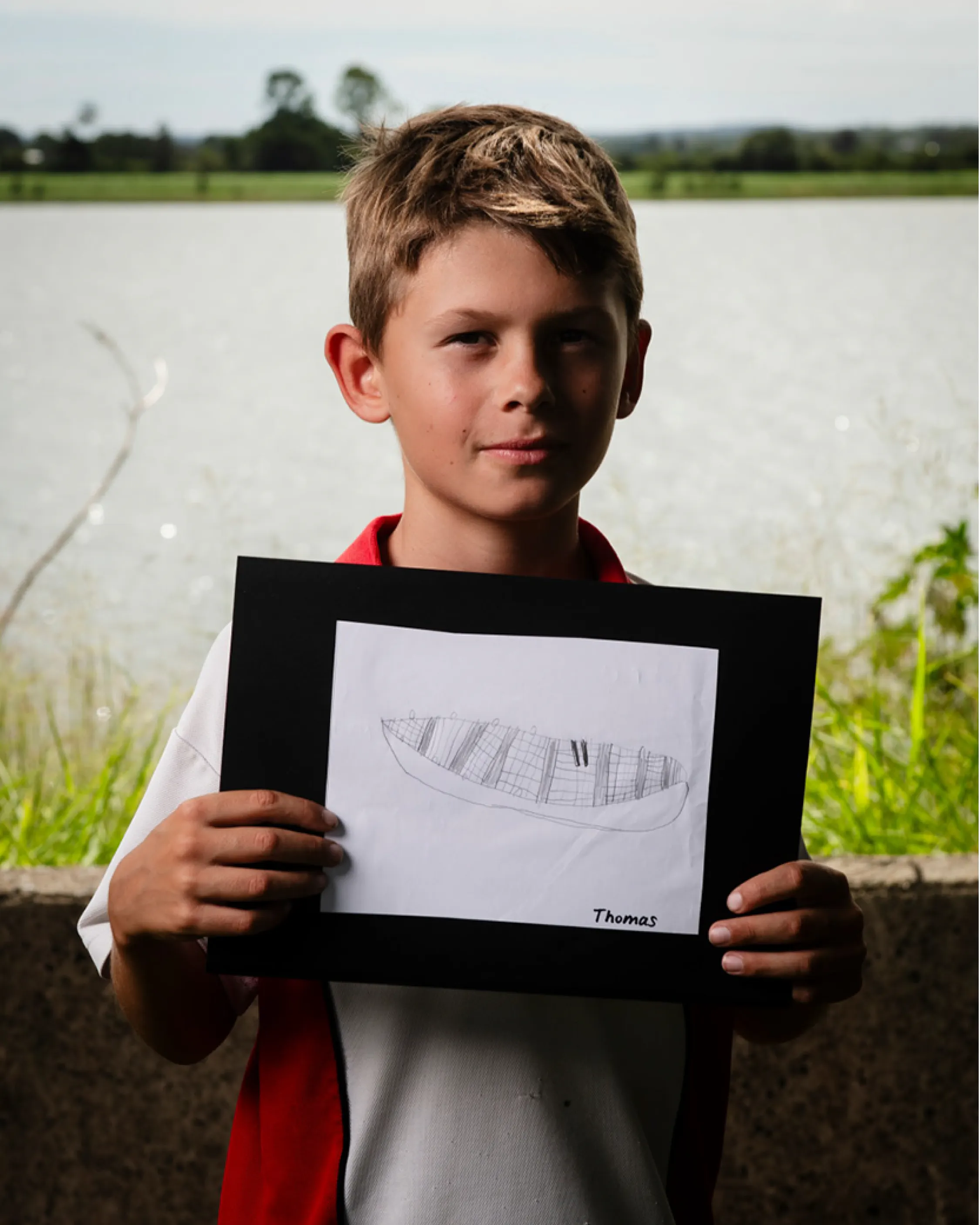
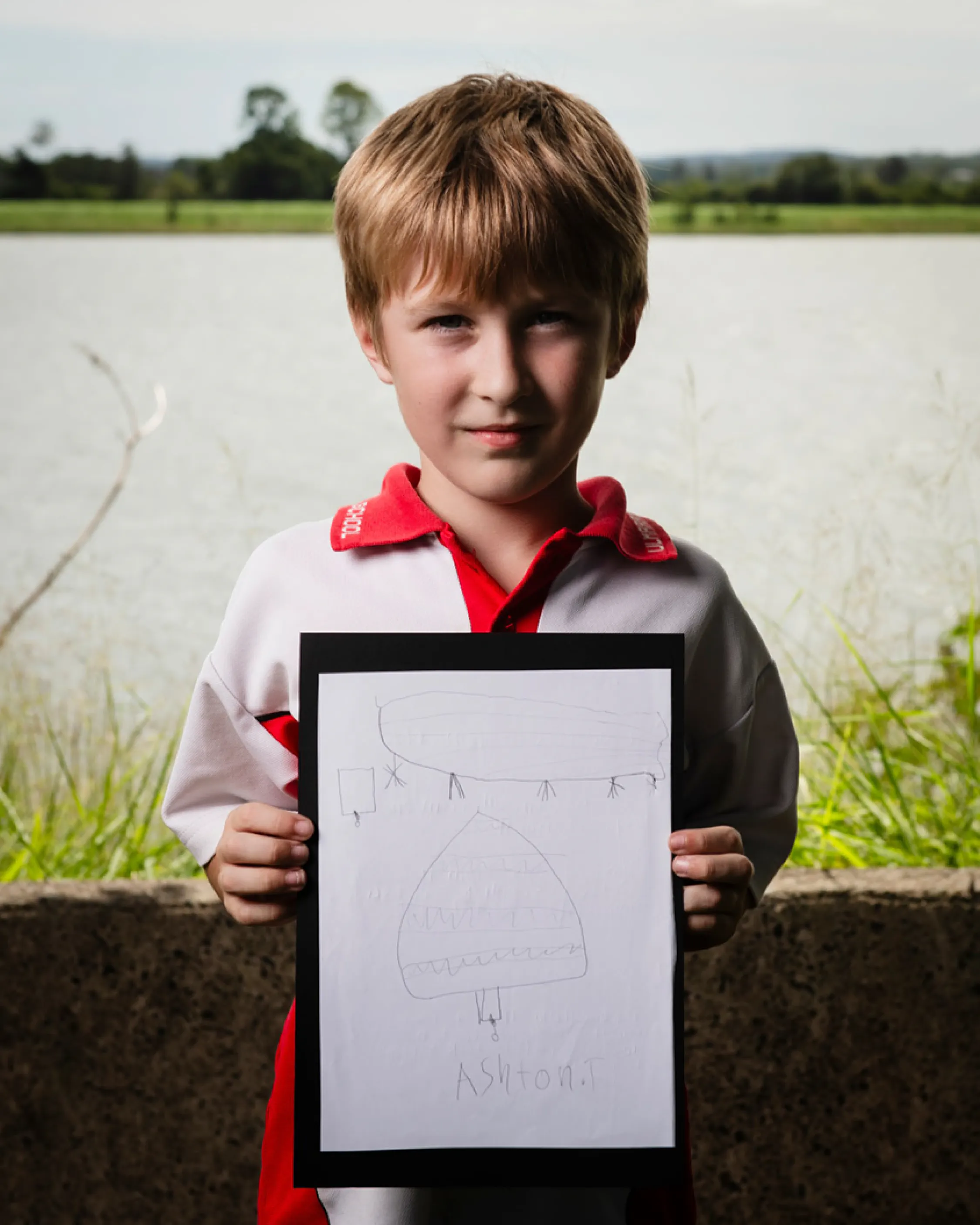
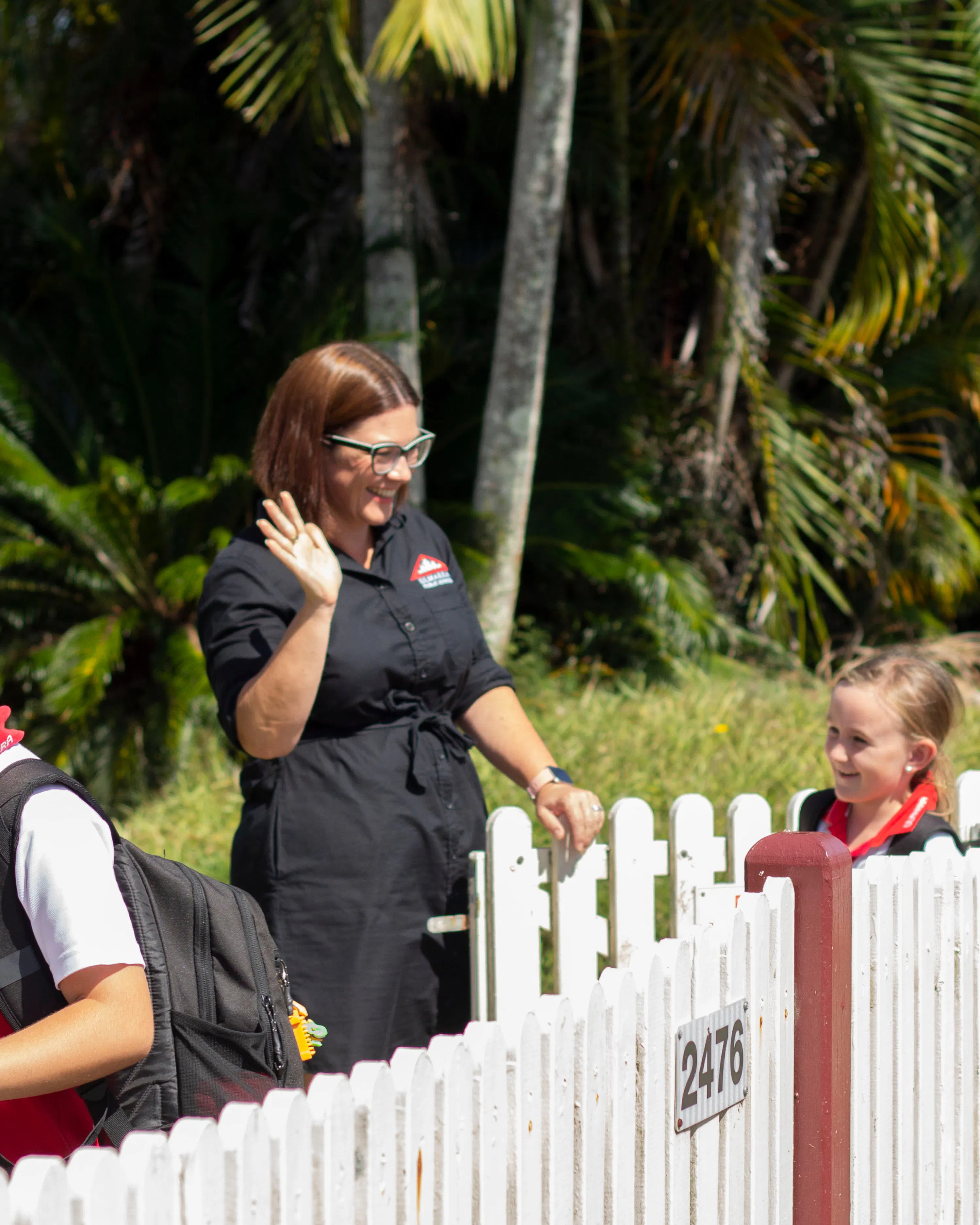
Bianca Rhodes
"The Living Memory project has been an invaluable learning experience for our students. It was wonderful to see their enthusiasm as they listened to local stories, examined historical sources, and brought history to life through their artwork and voices in The Flood Boat Story animation.
The opportunity to learn through a project centred on our own community strengthened their connection to both the curriculum and place. In particular, I would like to thank Dr Kate Gahan, whose expertise, passion and commitment made her a valued member of our classroom throughout the project."
Our thanks to Ulmarra Public School for taking part in this project; to Yaegl Elders and knowledge holders Aunty Lenore Parker, Diane Chapman and Shane Eamons, for sharing stories about their culture and history; Kevin Watkins and Lorna Reeves, for sharing their memories of Ulmarra and life on the river; the volunteers at the Lawrence Museum; and the SES officers who brought a flood boat to the school and spoke with students about the importance of being prepared.
Living Memory Ulmarra received funding from the Australian Government through the Northern Rivers Recovery and Resilience Program, administered by NSW Reconstruction Authority.
Images by Elise Derwin.
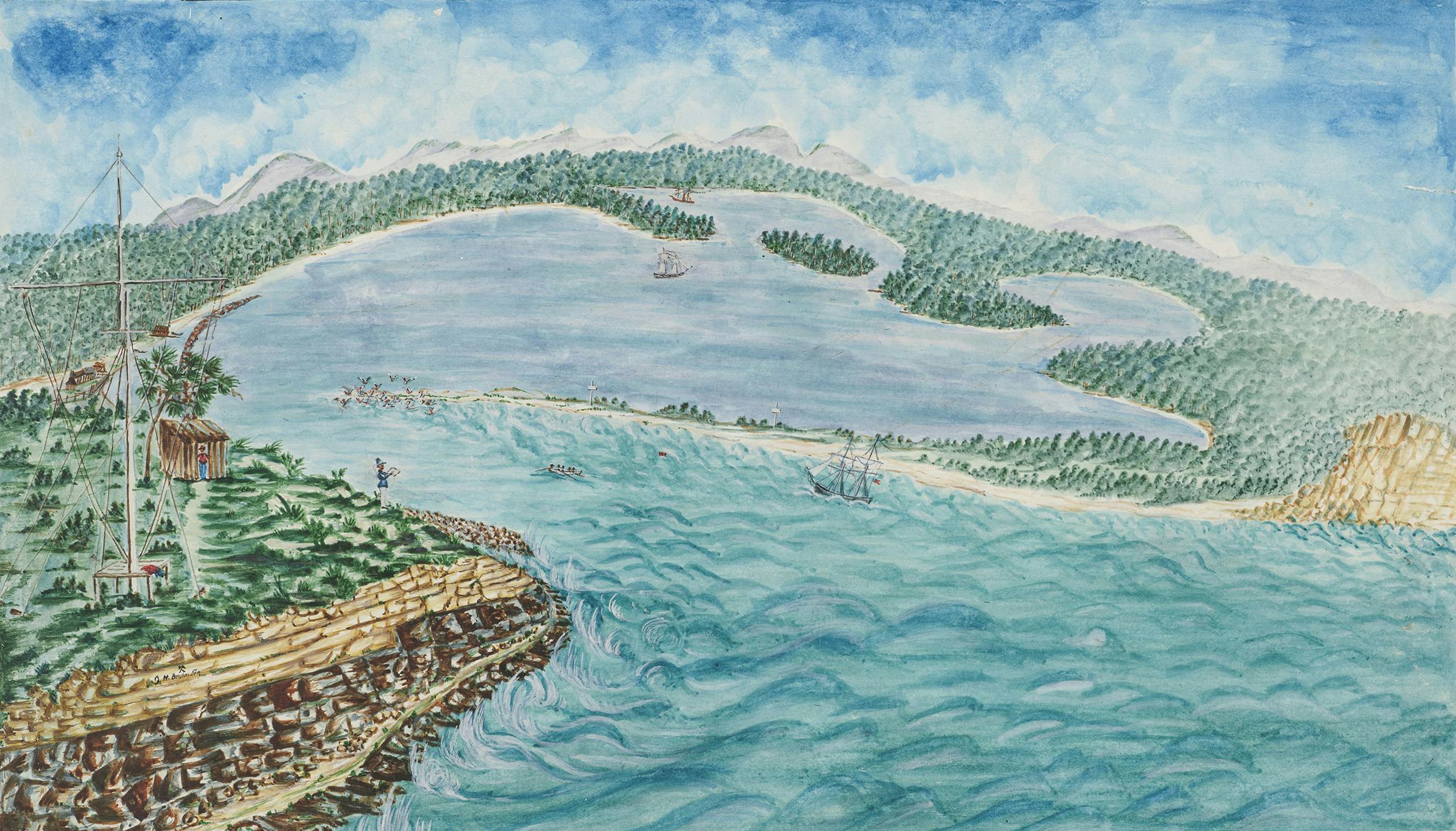
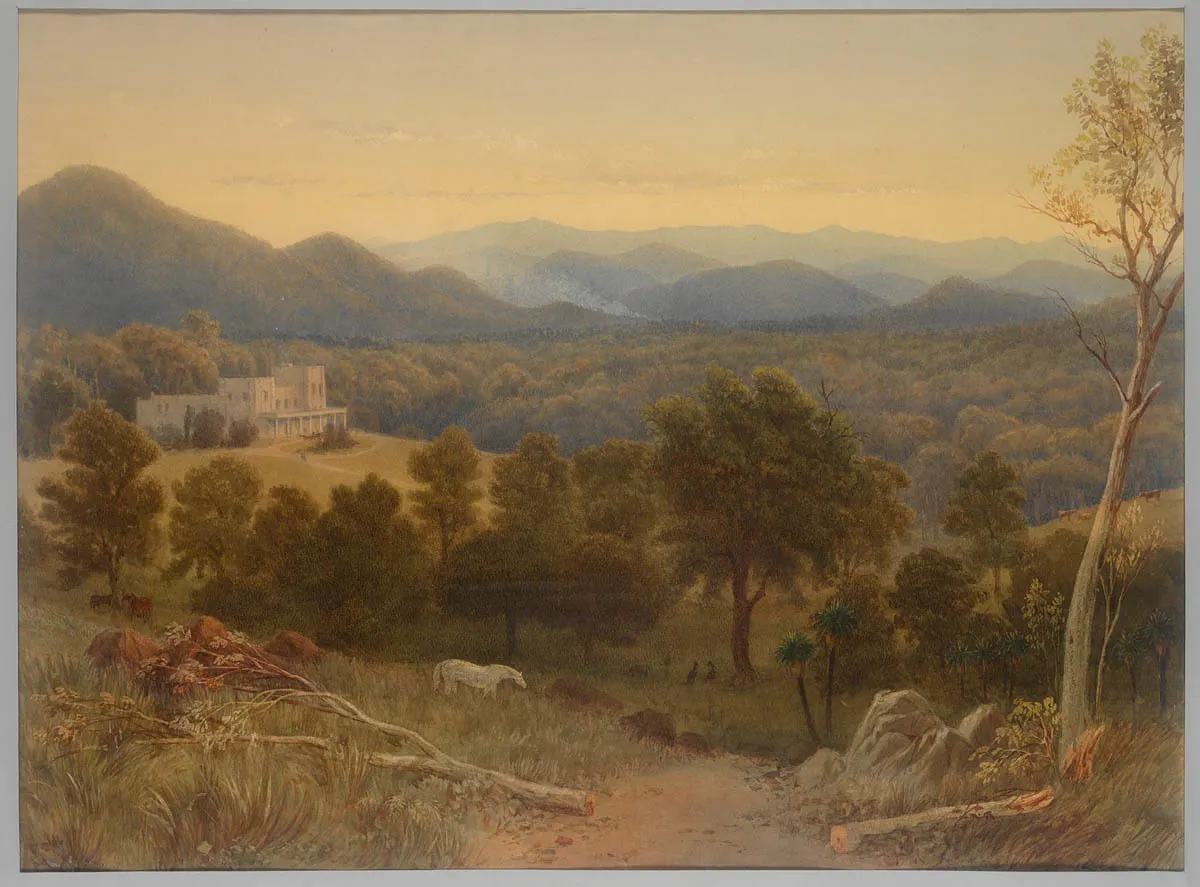
Banner image: George Bruhn’s painting of the mouth of Breimba/the Clarence River c.1860s. Courtesy State Library of NSW.
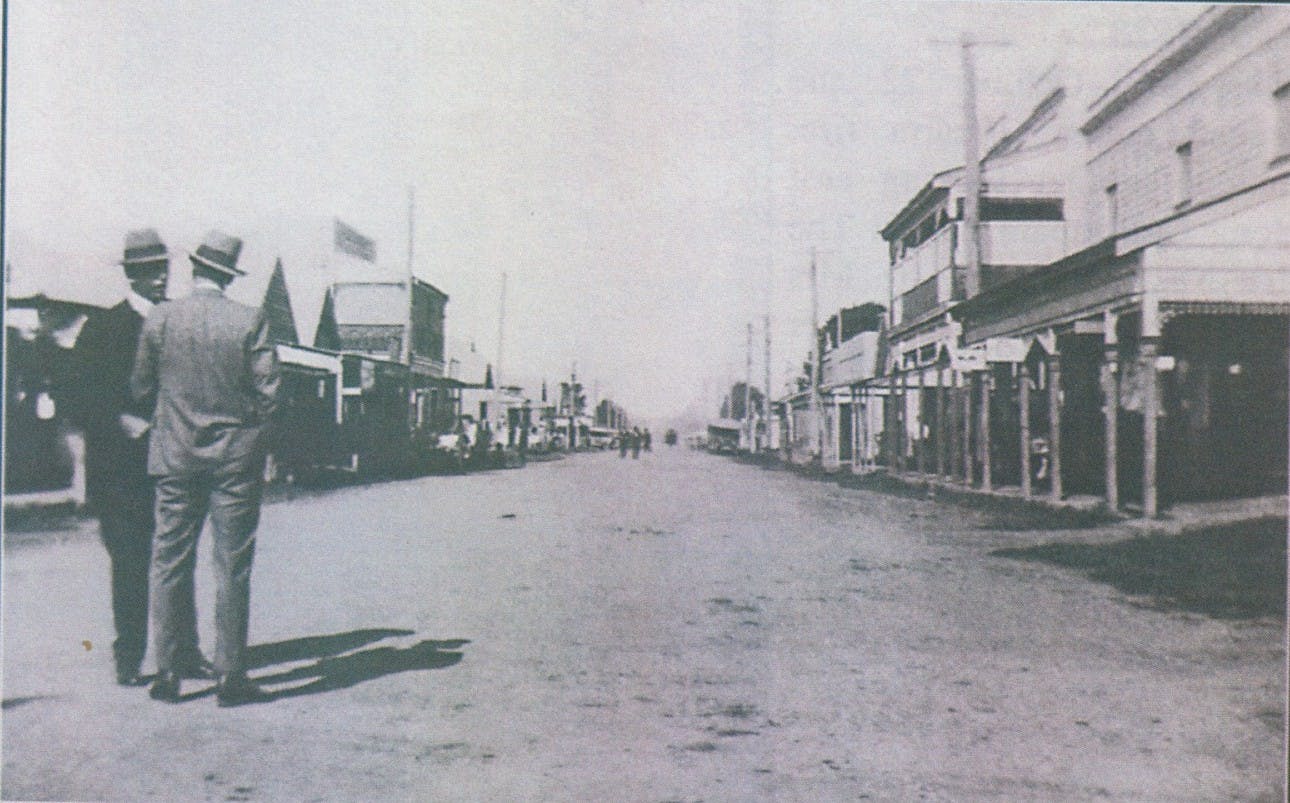
Coldstream Street, 1927. Image courtesy of Kevin Watkins.